Ecommerce finance teams do not need more dashboards. They need fewer manual handoffs, fewer invoice surprises, and fewer late-night Slack messages asking, “Did that vendor payment go out?”
If you’re comparing the top AP automation software, the real question is not just which platform captures invoices. It’s which one reduces operational drag across your business. For ecommerce teams, AP touches inventory receipts, 3PL bills, marketing spend, contractor invoices, subscription tools, and cross-functional approvals. A good system speeds up payables. A great one also keeps finance, operations, and commerce data aligned.
Short answer: AP automation software helps teams capture invoices, route approvals, schedule payments, and reconcile records with far less manual work. For ecommerce brands, the best platforms also support multi-entity growth, vendor visibility, faster month-end close, and clean connections to the systems already running the business.

Why AP automation matters more in ecommerce than most buyers realize
In ecommerce, payables are rarely isolated from operations. A supplier invoice can affect receiving, landed cost reporting, reorder timing, and even customer experience if stock is delayed. That’s why AP software selection should not be treated as a finance-only decision.
The strongest AP automation tools help teams:
reduce invoice entry and approval delays
improve visibility into cash commitments
prevent duplicate or late payments
support multi-brand or multi-entity workflows
create cleaner audit trails
connect finance activity to operational systems
“According to Ardent Partners' 2025 data, the average cost to process an invoice manually is approximately $9.87, whereas best-in-class organizations utilizing AP automation have reduced this cost to around $2.81 per invoice.” - Ardent Partners, cited by Medius
That gap matters when invoice volume spikes with growth, wholesale expansion, seasonal buying, or additional warehouses.
What ecommerce teams should look for first
Most comparison articles focus on generic features. That is useful, but incomplete. Ecommerce operators need to evaluate AP tools through a more practical lens.
Core AP capabilities you should expect
At a minimum, strong AP software should include:
invoice capture from email, PDF, scan, or e-invoice
approval routing by amount, department, subsidiary, or vendor
PO and non-PO invoice handling
payment scheduling and status tracking
audit trails and role-based controls
ERP or accounting sync
Ecommerce-specific requirements that change the decision
These are often underplayed in competitor roundups, but they matter fast once a brand grows:
Requirement | Why it matters for ecommerce |
|---|---|
Multi-entity support | Common for brands with separate stores, regions, or legal entities |
High-volume exception handling | Freight bills, marketing invoices, chargebacks, and vendor discrepancies add complexity |
Cross-functional approvals | Ops, procurement, finance, and founders may all touch approvals |
Global vendor payment support | Many brands buy from overseas suppliers and agencies |
Reconciliation speed | Faster close helps inventory planning and cash management |
Integration flexibility | AP data often needs to inform ops workflows, reporting, alerts, or downstream systems |
This is where workflow automation beyond finance becomes important. Many teams automate AP inside one tool, then still manage surrounding operational tasks manually. That creates a new bottleneck instead of removing the old one.
What competitors get wrong
The top-ranking articles from software vendors do a decent job explaining AP automation basics. But most of them miss a few important truths.
They treat AP as a silo
Many guides compare invoice capture, approvals, and payments without asking what happens after the invoice is approved. Ecommerce teams still need updated spreadsheets, Slack alerts, vendor exception workflows, order-level cost reporting, and clean system handoffs.
They over-index on feature checklists
“AI,” “OCR,” and “global payments” show up everywhere. But buyers need to know how these tools behave in real workflows. Can approvers move fast on mobile? Can exceptions be routed cleanly? Can finance trigger operational follow-up without waiting on a developer?
They rarely explain the integration layer clearly
A lot of software comparisons act as if ERP integration is enough. For many Shopify brands, it isn’t. Finance actions often need to trigger or inform operational workflows across reports, notifications, customer follow-up, and inventory coordination. That is exactly where flexible automation becomes valuable.
The best AP automation software for ecommerce teams
Below is a practical buyer-friendly list of standout options. This is not just about who has the biggest feature sheet. It is about fit for modern ecommerce teams.
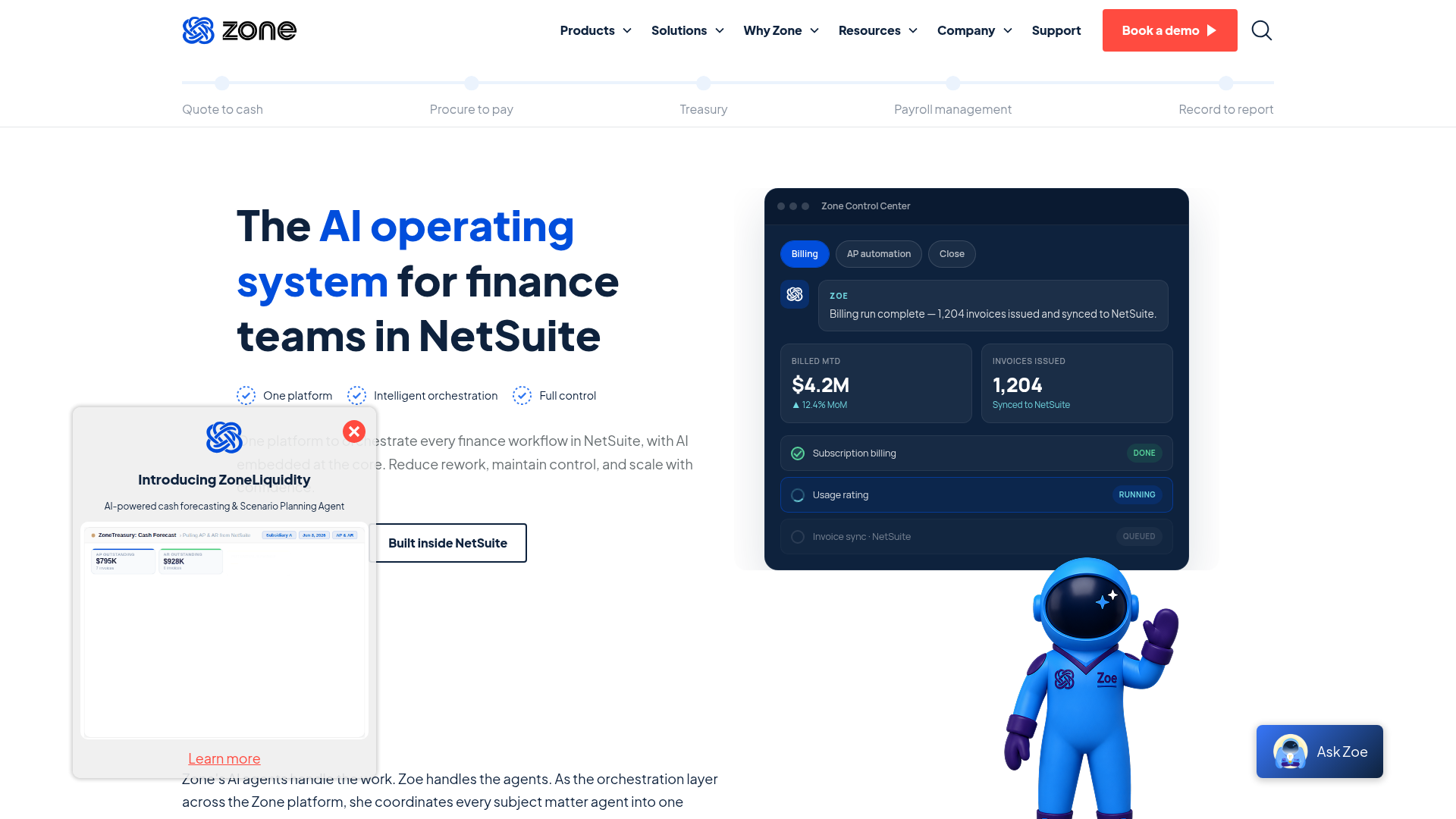
1. Zone & Co
Zone & Co stands out for NetSuite-first AP automation. If your business already runs deeply in NetSuite and wants AP processes to stay native there, it is a strong choice.
Best for
NetSuite-centric ecommerce businesses that want AP automation without leaving the ERP.
Strengths
native NetSuite experience
invoice capture, approvals, payments, and reconciliation
strong fit for multi-subsidiary finance teams
good auditability
Watchouts
best value depends on being a NetSuite shop
less relevant if your stack is not centered there
2. Tipalti
Tipalti is one of the most recognized AP automation platforms for global supplier payments and tax compliance.
Best for
Large or fast-scaling teams with international vendor networks and complex payout requirements.
Strengths
broad global payments coverage
supplier onboarding
tax form and compliance tooling
strong enterprise reputation
Watchouts
can be more complex and heavier to implement
may feel like overkill for leaner mid-market teams
integration and rollout effort should be evaluated carefully
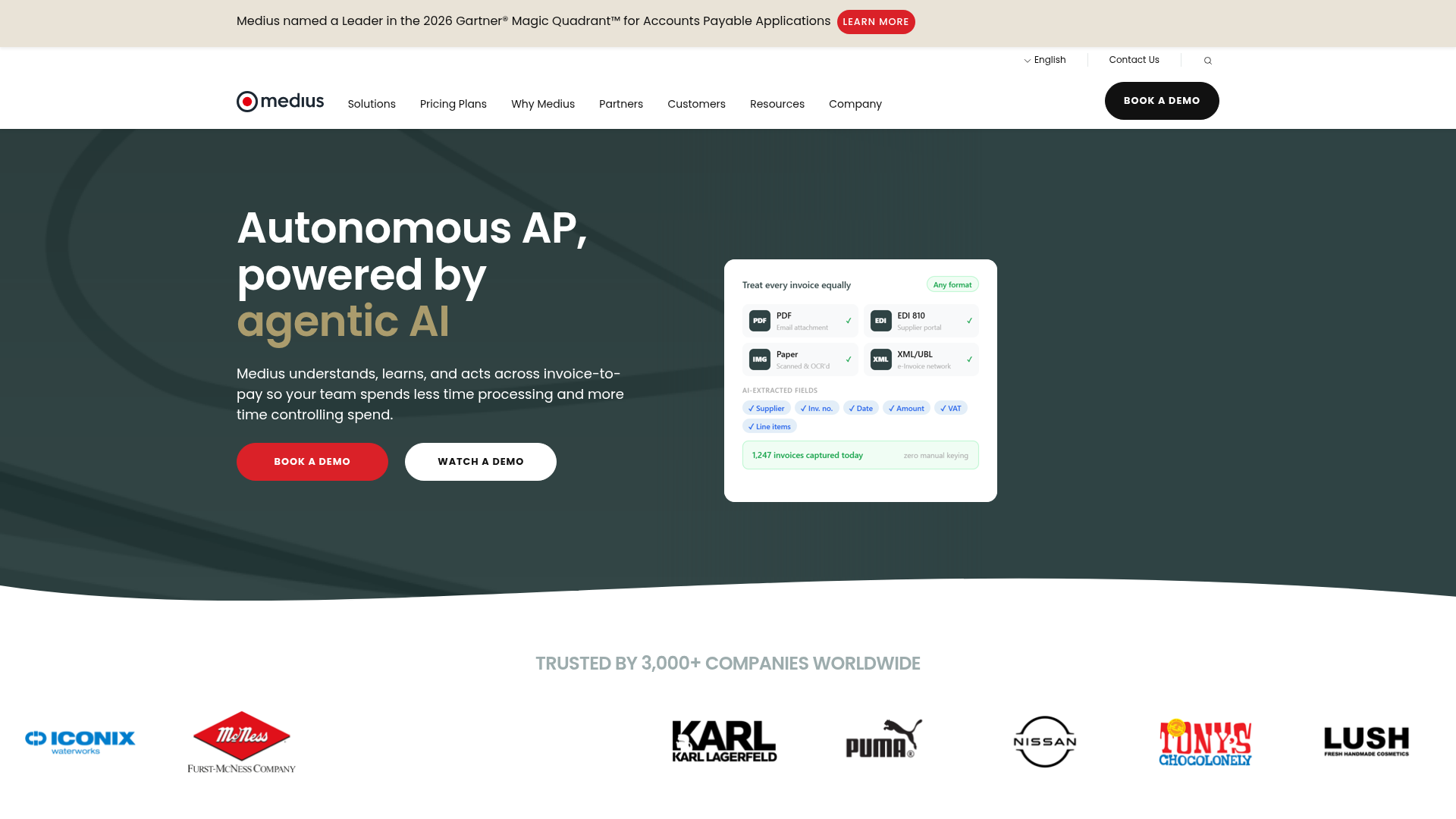
3. Medius
Medius is a strong mid-market to enterprise AP platform with a big emphasis on automation, fraud controls, and structured invoice workflows.
Best for
Organizations with significant invoice complexity, strong control requirements, or a need for deeper fraud detection.
Strengths
robust invoice-to-pay workflow
AI-led exception reduction
good support for controls and approvals
enterprise-grade capabilities
Watchouts
structured rollout may be heavier than some growing brands want
may require more internal process maturity to get full value
“According to Ardent Partners' 2025 State of ePayables Report, businesses utilizing advanced automation have reduced invoice processing times to 2.9 days, compared to the industry average of 8.2 days.” - Ardent Partners, cited by Medius
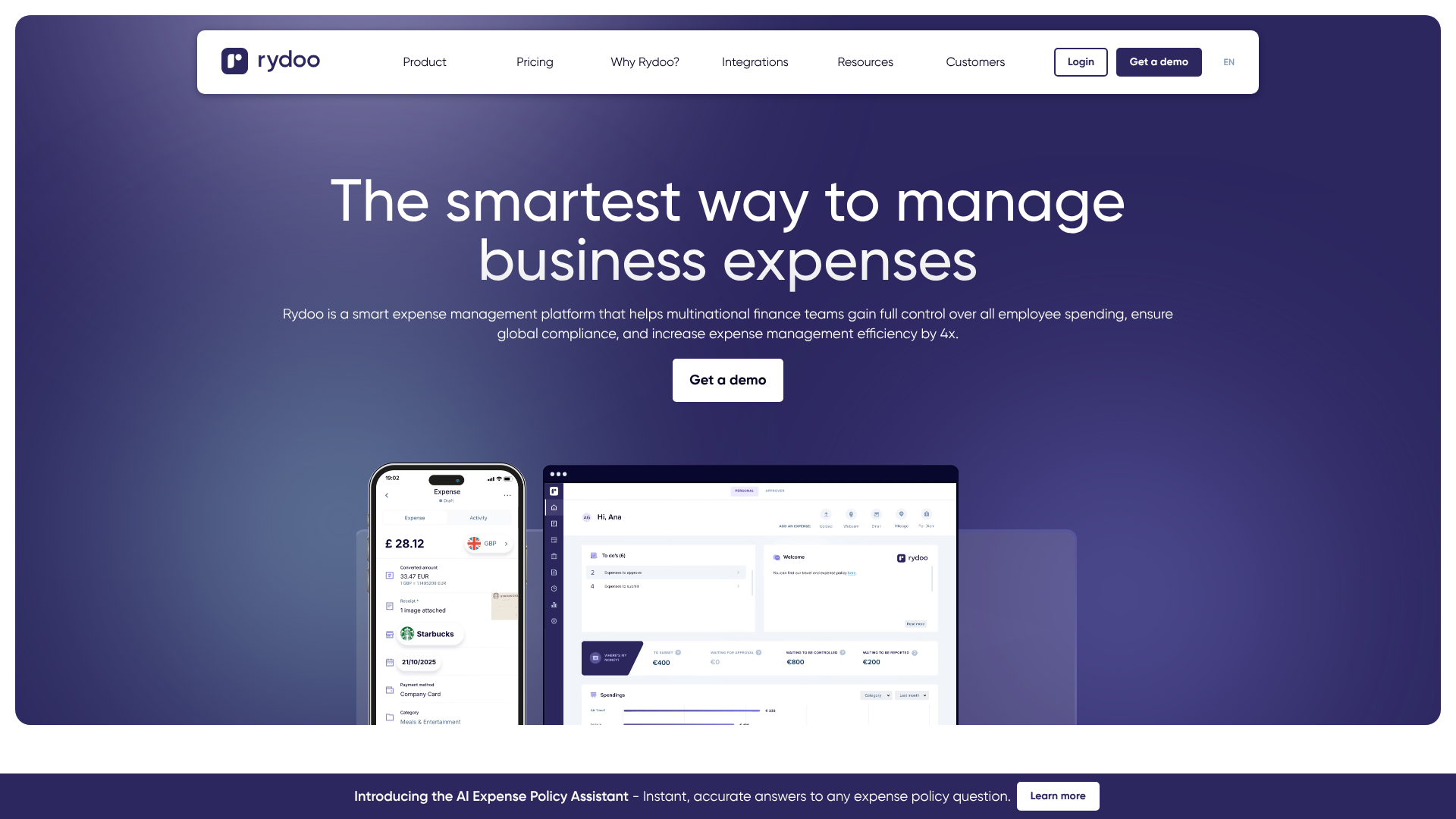
4. Rydoo / Semine
Rydoo’s content positions Semine as a modern AP automation option for teams that want AI-driven invoice handling with ERP integrations.
Best for
Mid-sized teams modernizing finance workflows and looking for a newer, AI-forward approach.
Strengths
strong focus on usability
ERP integration positioning
modern AP narrative tied to broader spend management
Watchouts
buyers should validate maturity in their exact region and workflow complexity
less universally known than some long-established AP vendors
5. BILL
BILL remains a popular AP choice for smaller businesses that want straightforward bill pay and approvals.
Best for
Small ecommerce businesses or lean finance teams that need quick time-to-value.
Strengths
simple setup
approachable interface
useful for lower-complexity AP needs
Watchouts
more limited for advanced approval structures
can become less ideal as multi-entity and volume complexity grows
6. Stampli
Stampli is often favored for collaborative invoice approvals and communication around AP.
Best for
Teams where invoice review is highly collaborative and approver participation is a major bottleneck.
Strengths
strong workflow collaboration
AI-assisted coding and routing
good reputation for user satisfaction
Watchouts
pricing usually requires a sales process
buyers with broader finance-to-ops automation needs may still need complementary tools
7. Sage Intacct
Sage Intacct is relevant for mid-market companies looking for AP within a wider finance platform.
Best for
Teams already in the Sage ecosystem or evaluating broader financial management improvements alongside AP.
Strengths
multi-entity support
dimensional reporting
finance-oriented controls
Watchouts
total ownership costs can rise with complexity
implementation depth may exceed what some fast-moving commerce teams want
Quick comparison table
Tool | Best fit | Main advantage | Main tradeoff |
|---|---|---|---|
Zone & Co | NetSuite-centric teams | Native NetSuite AP workflow | Best for NetSuite users only |
Tipalti | Global supplier-heavy teams | International payments and tax compliance | More complex implementation |
Medius | Mid-market and enterprise AP | Controls, automation, fraud reduction | Heavier rollout |
Rydoo / Semine | Modernizing finance teams | AI-forward AP approach | Validate fit by region and complexity |
BILL | Small teams | Fast setup and simplicity | Limited at scale |
Stampli | Collaboration-heavy approvals | Strong invoice review workflows | Broader ops automation may need more tools |
Sage Intacct | Finance platform buyers | Multi-entity financial management | Broader ERP complexity |
How MESA fits into the AP conversation for Shopify brands
MESA is not an AP platform, and that distinction matters. It should not replace your finance system. It should make that system more useful across the rest of your ecommerce operations.
For many Shopify teams, the gap is not “we have no AP software.” The gap is “our AP system does not trigger the operational follow-up our team still does manually.”
That is where MESA becomes the logical next step.
With MESA, teams can describe what they need accomplished and quickly turn that into live workflows without custom development. That matters when you want finance and operations to stay aligned without creating ticket backlogs for engineering.
Real examples of AP-adjacent workflows ecommerce teams automate
Once invoices, payments, or vendor exceptions happen in your finance stack, MESA can help orchestrate what happens next around Shopify and connected tools:
send Slack alerts when high-cost vendor bills or payment failures need review
sync invoice or payout data into Google Sheets for ops reporting and cash tracking
tag orders or vendors when finance issues affect fulfillment timing
trigger follow-up tasks for procurement or warehouse teams
create escalation paths for reconciliation exceptions
keep marketing, operations, and finance stakeholders updated automatically
If your business already relies on spreadsheets for finance visibility, MESA’s Shopify to Google Sheets integrations can reduce copy-paste reporting and keep shared data current. If you need broader orchestration, MESA’s data integration automation helps connect ecommerce events with the rest of your operational workflows.
Where ecommerce operators usually feel the pain first
AP issues show up in places that do not look like AP at first glance.
Inventory and receiving delays
When supplier invoices, receipts, and warehouse confirmations do not line up, teams lose time figuring out whether to reorder, receive, or escalate.
Approval bottlenecks
Founders, ops leads, and finance managers all get pulled into approvals. Without automation, invoices sit in inboxes and everyone assumes someone else handled it.
Month-end close pressure
Fast-growing brands often outgrow manual reconciliations before they realize it. The result is close-week chaos and lagging visibility.
Reporting fragmentation
Finance, ops, and ecommerce teams often work from different datasets. That leads to duplicated effort and conflicting numbers.
MESA helps reduce those surrounding manual tasks, especially when AP systems need to connect with Shopify workflows, spreadsheets, Slack, or other ecommerce tools. Teams that want broader operational control can explore enterprise automation for Shopify when simple one-step automations are no longer enough.
How to choose the right AP automation software for your stage
If you are a smaller brand
Prioritize:
ease of use
clean invoice capture
basic approvals
reasonable implementation time
You probably do not need the heaviest enterprise option yet.
If you are a scaling mid-market brand
Prioritize:
multi-entity flexibility
approval logic
reconciliation visibility
stronger integrations
operational workflows around finance events
This is often where teams begin to outgrow basic software and need connected automations across the business.
If you are an enterprise ecommerce team
Prioritize:
auditability and controls
global payments
exception handling at scale
fraud prevention
ERP depth
cross-system orchestration
At this stage, AP software and commerce automation should work together, not separately.
Questions to ask every AP vendor before you buy
Here are the questions that save time later:
How does the tool handle both PO and non-PO invoices?
What does implementation actually require from our team?
How are exceptions surfaced and resolved?
How does approval routing work across entities or departments?
What payment methods and countries are supported?
How does reconciliation work after payment?
What reporting is available out of the box?
What integrations are native, and what requires outside help?
How long until we realistically see value?
How easily can AP events trigger workflows in the rest of our stack?
That last question is where many ecommerce teams uncover their real requirement. The best AP system may still need a flexible automation layer around it.
A practical buying framework for ecommerce teams
Use this simple scoring model when comparing options:
Evaluation area | Weight | What to look for |
|---|---|---|
AP workflow depth | High | Capture, approvals, payments, reconciliation |
Ecommerce operational fit | High | Ability to support inventory, receiving, vendor complexity |
Ease of rollout | Medium | Time-to-value, training, support |
Controls and auditability | High | Approvals, logs, permissions |
Global capabilities | Medium | Currencies, vendor coverage, tax/compliance needs |
Integration flexibility | High | ERP, spreadsheets, alerts, downstream ops workflows |
Scalability | High | Multi-entity, higher invoice volume, growing complexity |
A platform can score well on finance features and still create problems if it cannot connect cleanly to the way your business actually runs.
Final verdict
The top AP automation software for ecommerce teams depends on your finance stack, invoice complexity, and growth stage.
Choose Zone & Co if you want a NetSuite-native approach.
Choose Tipalti if global payments and compliance are the priority.
Choose Medius if you need stronger controls and enterprise automation depth.
Choose BILL if you want lightweight AP for a smaller team.
Choose Stampli if collaborative approvals are your biggest bottleneck.
But if you are a Shopify brand, there is a second decision that matters just as much: how finance events connect to the rest of your operations.
That is where MESA stands out. It helps merchants automate repetitive Shopify tasks without needing a developer, supports complex multi-step workflows, and lets teams describe what they need accomplished in plain English to create real automations quickly. With 300+ templates, 100+ app connections, and real human support, MESA helps reduce manual work across reporting, alerts, inventory sync, post-purchase follow-up, and the many operational tasks AP software does not handle on its own.
If your team is ready to connect finance signals with the rest of your commerce stack, start with MESA’s automation platform for Shopify operations or browse the workflow template library to find a faster path to setup.
FAQ
What's the most recommended AP automation platform?
There is no single best fit for every team. Zone & Co is a strong pick for NetSuite users, Tipalti for global payments, and Medius for deeper controls and enterprise needs. For Shopify brands, the best outcome often comes from pairing AP software with MESA to automate the operational follow-up around finance events.
How much does AP automation cost?
Pricing varies widely based on invoice volume, entities, payment features, and implementation scope. Smaller tools may be relatively affordable, while enterprise platforms can require larger annual contracts and rollout effort. The bigger cost question is usually how much manual processing, delay, and error your team can eliminate.
What are AP automation tools?
AP automation tools are software platforms that digitize invoice capture, approval routing, payment scheduling, and reconciliation. They help finance teams reduce manual work, improve visibility, and maintain stronger controls across the invoice-to-pay process.
Is AI replacing accounts payable?
No. AI is improving accounts payable, not eliminating the function. It helps teams process invoices faster, reduce exceptions, and spot risks earlier, while finance and operations leaders still make policy, approval, and cash-management decisions.