

Best Zapier Alternative Options in 2026
-
- •
- Jun. 27, 2026
- •
- 13 min read

If you are searching for the best Zapier alternative in 2026, the real question usually is not “Which tool has the most integrations?” It is: which platform will actually reduce manual work, fit how your team operates, and keep up as your store gets more complex.
For Shopify merchants and ecommerce operators, that distinction matters. A simple trigger-action tool may work at first, but once you need to automate order routing, inventory sync, fraud checks, customer follow-up, exception alerts, and reporting across multiple apps, the wrong platform creates a new kind of busywork. You end up babysitting automations instead of benefiting from them.
Here is the short answer: the best Zapier alternative depends on your workflow complexity, technical comfort, and whether ecommerce is at the center of your operations. For general-purpose visual automation, Make and n8n are strong contenders. For enterprise IT, Workato and Power Automate are credible options. For Shopify-first operators who want to describe what they need accomplished and turn that into live workflows quickly, MESA is often the better fit because it is built around real ecommerce operations rather than generic app plumbing.
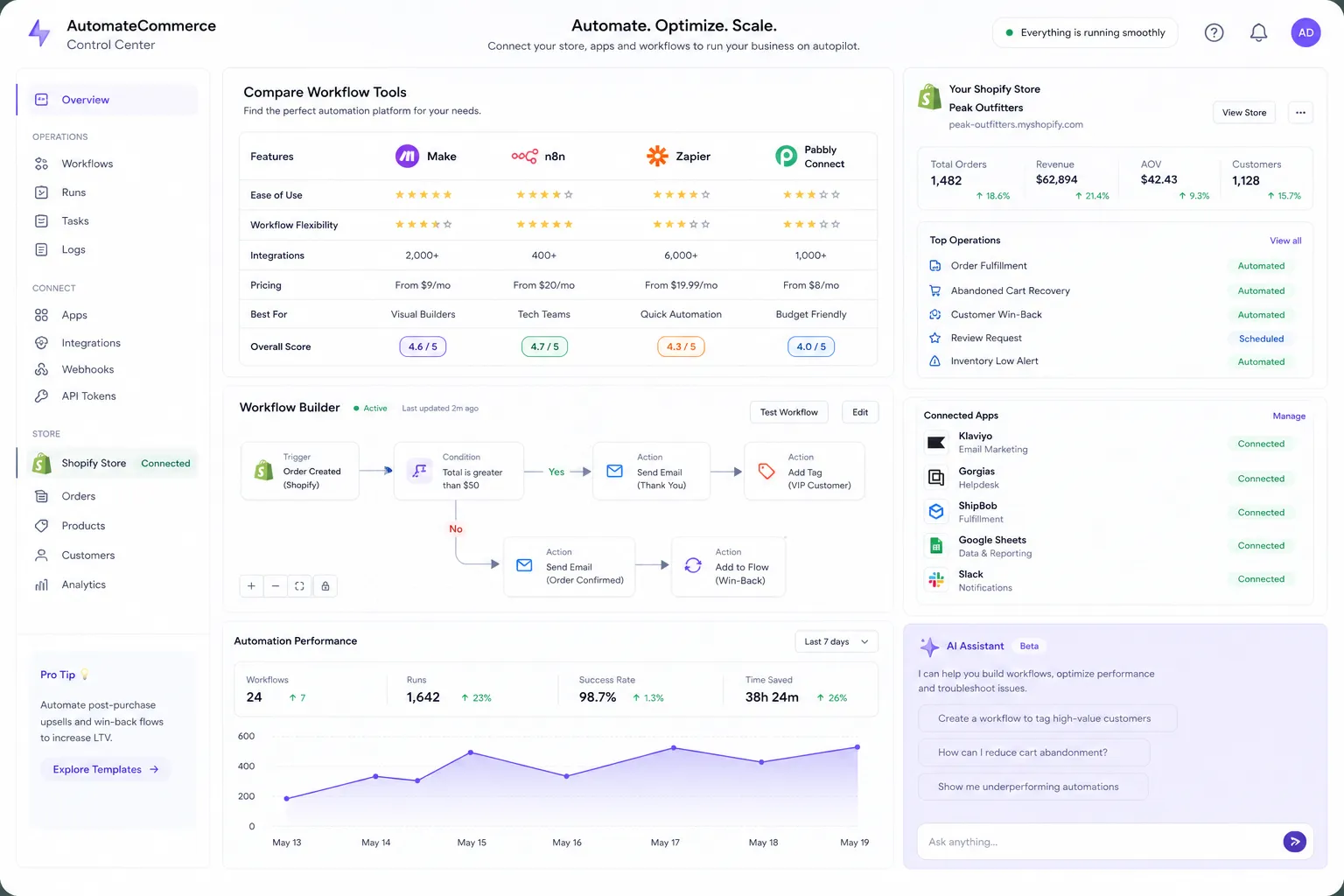
Table of Contents:
What actually makes a Zapier replacement worth switching to?
Most comparison articles focus too heavily on pricing tables and app counts. Those matter, but they miss what operators care about day to day:
-
Will this reduce ticket queues and spreadsheet cleanup?
-
Can my team adjust workflows without waiting on developers?
-
Will it handle multi-step logic without becoming brittle?
-
Does it work well with Shopify and our existing app stack?
-
Can we prevent overselling, missed alerts, broken handoffs, and reporting gaps?
That is the lens to use.
“As of May 2026, 19.5% of U.S. businesses reported using artificial intelligence in their operations.” – U.S. Census Bureau’s Business Trends and Outlook Survey
That number matters because automation expectations have changed. Teams no longer want only app-to-app triggers. They want systems that can help interpret requests, speed up workflow creation, and reduce maintenance overhead.
“98% of Shopify merchants have difficulty aligning inventory and production with changing consumer demand, with 60% reporting significant difficulty.” – Katana Cloud Inventory survey reported by Business Wire
That is why ecommerce brands should judge automation tools differently than a general SaaS buyer would. Inventory, order state changes, fulfillment exceptions, returns, and customer notifications are not edge cases. They are the work.
The best Zapier alternatives at a glance
|
Tool |
Best for |
Technical level |
Ecommerce fit |
Notable trade-off |
|---|---|---|---|---|
|
MESA |
Shopify-first operations automation |
Low to medium |
Excellent |
Less relevant outside ecommerce |
|
Make |
Visual multi-step workflows |
Medium |
Good |
Can get hard to manage at scale |
|
n8n |
Flexible self-hosted automation |
Medium to high |
Good |
More technical setup |
|
Activepieces |
Open source and cost-conscious teams |
Medium |
Moderate |
Smaller ecosystem than top incumbents |
|
IFTTT |
Very simple personal automations |
Low |
Low |
Too lightweight for serious store ops |
|
Workato |
Enterprise integration and governance |
High |
Good |
Expensive and heavy for SMBs |
|
Gumloop |
AI-native workflow building |
Low to medium |
Moderate |
Newer platform, lighter app depth in some areas |
|
Lindy |
AI assistants and task delegation |
Low to medium |
Moderate |
Less predictable for structured ops flows |
|
Pabbly Connect |
Budget-focused automation |
Low to medium |
Moderate |
UI and reliability can feel less polished |
|
Power Automate |
Microsoft-centric organizations |
Medium to high |
Moderate |
Best when you already live in Microsoft |
What competitors get wrong
After reviewing the top-ranking comparison pages, a clear pattern shows up: most do a decent job listing tools, but they underserve ecommerce buyers in four important ways.
1. They compare software as if every business automates the same way
A marketing agency, an internal IT team, and a Shopify merchant do not have the same needs. Yet many roundup posts treat them as interchangeable. Ecommerce operations need automation that understands order events, fulfillment timing, inventory status, post-purchase messaging, and app sync reliability.
2. They overvalue raw integration count
“Thousands of integrations” sounds impressive, but it is often the wrong metric. Operators usually need a smaller set of integrations that actually matter to their business and work reliably under real order volume. For merchants, deep Shopify relevance beats a giant but generic app catalog.
3. They ignore workflow maintenance
Building an automation is one thing. Keeping it healthy six months later is another. Many articles skip over failure handling, operational visibility, support quality, and how easy it is for non-technical teams to revise workflows as processes change.
4. They mention AI without explaining practical value
“AI-powered” is now on every pricing page. What matters is whether AI helps you describe what you need accomplished, generate a usable workflow, reduce setup time, and prevent logic mistakes. If AI adds novelty but not speed or clarity, it is not a real advantage.
How to choose the right platform for your team
Before looking at individual tools, use this simple decision framework.
Choose based on your operating model, not just your budget
If you run a Shopify brand with growing order volume, subscriptions, fulfillment partners, and customer support workflows, you need a platform that supports:
-
Multi-step logic
-
Reliable Shopify event handling
-
Easy edits by operators
-
Reporting and exception alerts
-
Human support when workflows need tuning
If you are a technical team that wants self-hosting or code extensibility, your shortlist changes.
If you are mainly automating internal Microsoft workflows, your shortlist changes again.
Prioritize these five criteria
Workflow depth
Can it handle branching, delays, lookups, retries, and exception paths without becoming unreadable?
Ease of creation
Can non-developers build or refine workflows quickly?
Ecommerce relevance
Does it support realistic commerce use cases like order tagging, fraud holds, fulfillment routing, inventory sync, returns, and customer follow-up?
Reliability and support
When something breaks, how quickly can your team diagnose and fix it?
Total operational cost
Do not just compare monthly plan prices. Include maintenance time, failed sync risk, and the cost of needing outside help.
Detailed reviews of the best Zapier alternatives
MESA
Best for
Shopify merchants, ecommerce operations teams, and growing brands that want automation built around store operations.
Why it stands out
MESA is different because it is not trying to be everything to everyone. It is designed for merchants who need to automate repetitive Shopify work without relying on custom development. That focus matters.
Instead of forcing operators into a generic builder mindset, MESA helps you describe what you need accomplished and turn that into a live workflow quickly. Its AI assistant, Yedric, is especially useful when your team knows the outcome they want but does not want to spend hours mapping every step manually.
MESA also supports complex multi-step workflows across 100+ apps and ecommerce tools, plus 300+ ready-made templates. That makes it practical for teams who need to move fast on use cases like:
-
Tagging and routing orders based on risk, location, or product mix
-
Syncing inventory between Shopify and external systems
-
Sending real-time Slack alerts for failed payments or fulfillment exceptions
-
Updating Google Sheets or Airtable for reporting
-
Triggering post-purchase follow-up or customer experience flows
-
Preventing broken data flows that create downstream support issues
For merchants specifically evaluating a Zapier alternative for Shopify automation, MESA is often the most operationally relevant option because it is built around the jobs merchants actually need done.
Where it can be even better
If your business is not Shopify-centric, MESA may be more specialized than you need. Its strongest advantage comes from that ecommerce focus.
Why ecommerce teams like it
The biggest win is not theoretical flexibility. It is reduced backlog. Teams can automate order handling, reporting, inventory sync, and alerts without waiting on engineering. And when workflows need improvement, MESA provides real human support instead of leaving operators to troubleshoot alone.
If your primary goal is to improve AI-powered ecommerce automation without increasing technical complexity, MESA is one of the strongest options on the market.
Make
Best for
Teams that want a visual automation builder with strong branching and a lower starting price than Zapier.
Why it stands out
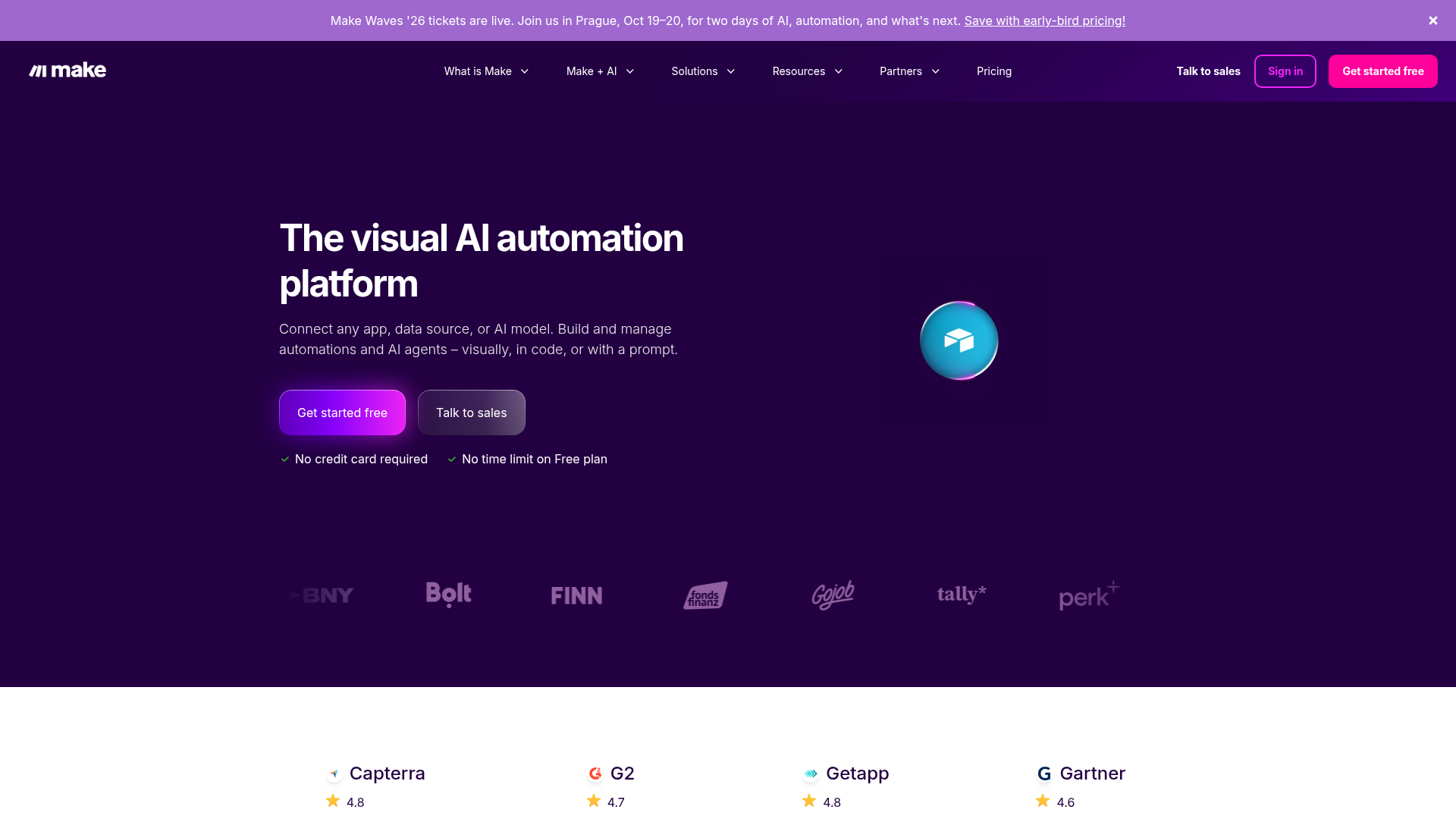
Make remains one of the strongest general-purpose automation tools. Its visual scenario builder is powerful, and many users like the control it gives over branching logic, data transformation, and multi-step paths.
For ecommerce brands, Make can work well for moderately complex automations, especially if you have someone on the team who is comfortable maintaining a more technical canvas.
Trade-offs
As workflows grow, Make can become harder to read and govern. That is especially true when you have multiple branches, error states, and app dependencies. It is powerful, but not always operator-friendly.
Bottom line
A good fit if you want flexibility and do not mind a steeper maintenance curve.
n8n
Best for
Technical teams that want a Zapier alternative open source or need self-hosting control.
Why it stands out
n8n is one of the most credible options if you want flexibility, code extensibility, and deployment control. It is especially attractive to teams looking for a Zapier open source alternative that can be self-hosted and customized deeply.
Trade-offs
For non-technical operators, n8n can be overkill. You will get more control, but you will also own more complexity.
Bottom line
Excellent if your team has technical resources. Less ideal if your operations team wants to move without engineering involvement.
Activepieces

Best for
Cost-conscious teams that want an open ecosystem and self-hosting options.
Why it stands out
Activepieces has earned attention as a newer, more affordable platform with open-source roots. For buyers specifically searching for a Zapier free alternative or a lighter-weight open platform, it is worth considering.
Trade-offs
Its ecosystem and maturity still lag behind the most established players. For teams with high order volume or mission-critical workflows, that maturity gap matters.
Bottom line
Promising option for budget-sensitive teams, especially those with technical comfort.
IFTTT
Best for
Basic personal automations.
Why it stands out
It is simple, inexpensive, and approachable.
Trade-offs
For serious ecommerce operations, it is too lightweight. Most Shopify merchants will outgrow it almost immediately.
Bottom line
Useful for simple consumer workflows, not a serious long-term platform for store operations.
Workato
Best for
Larger organizations that need governance, scale, and enterprise integration patterns.
Why it stands out
Workato is credible, mature, and built for enterprise requirements.
Trade-offs
It is expensive, heavier to implement, and not especially friendly for lean ecommerce teams.
Bottom line
Strong enterprise tool, but usually too much platform for the average merchant.
Gumloop

Best for
Teams interested in AI-native workflow building and unstructured-data tasks.
Why it stands out
Gumloop does a good job making AI feel central to workflow creation rather than bolted on.
Trade-offs
It is still earlier in maturity than older automation incumbents, and its ecommerce-specific depth is not its main selling point.
Bottom line
Interesting platform, particularly for AI-first experimentation.
Lindy

Best for
Teams that want AI assistants for sales, support, and administrative tasks.
Why it stands out
Lindy leans into the AI employee concept, which can be appealing for natural-language task automation.
Trade-offs
For structured ecommerce processes, predictability matters. Assistant-style tools are not always the best fit for precise operational logic.
Bottom line
Compelling for certain front-office workflows, less ideal for core store ops.
Pabbly Connect

Best for
Budget-sensitive buyers that want a simpler paid alternative.
Why it stands out
Pabbly is usually part of the conversation because of pricing value.
Trade-offs
Lower cost often comes with trade-offs in polish, ecosystem maturity, or reliability under more complex use cases.
Bottom line
Worth a look if cost is the dominant factor.
Microsoft Power Automate
Best for
Organizations already centered on Microsoft 365, Teams, and related systems.
Why it stands out
It makes sense in Microsoft-heavy environments and offers respectable enterprise breadth.
Trade-offs
Outside that ecosystem, it can feel less intuitive and more cumbersome than modern specialist tools.
Bottom line
A practical fit for Microsoft-first businesses, not the most elegant choice for Shopify-led teams.
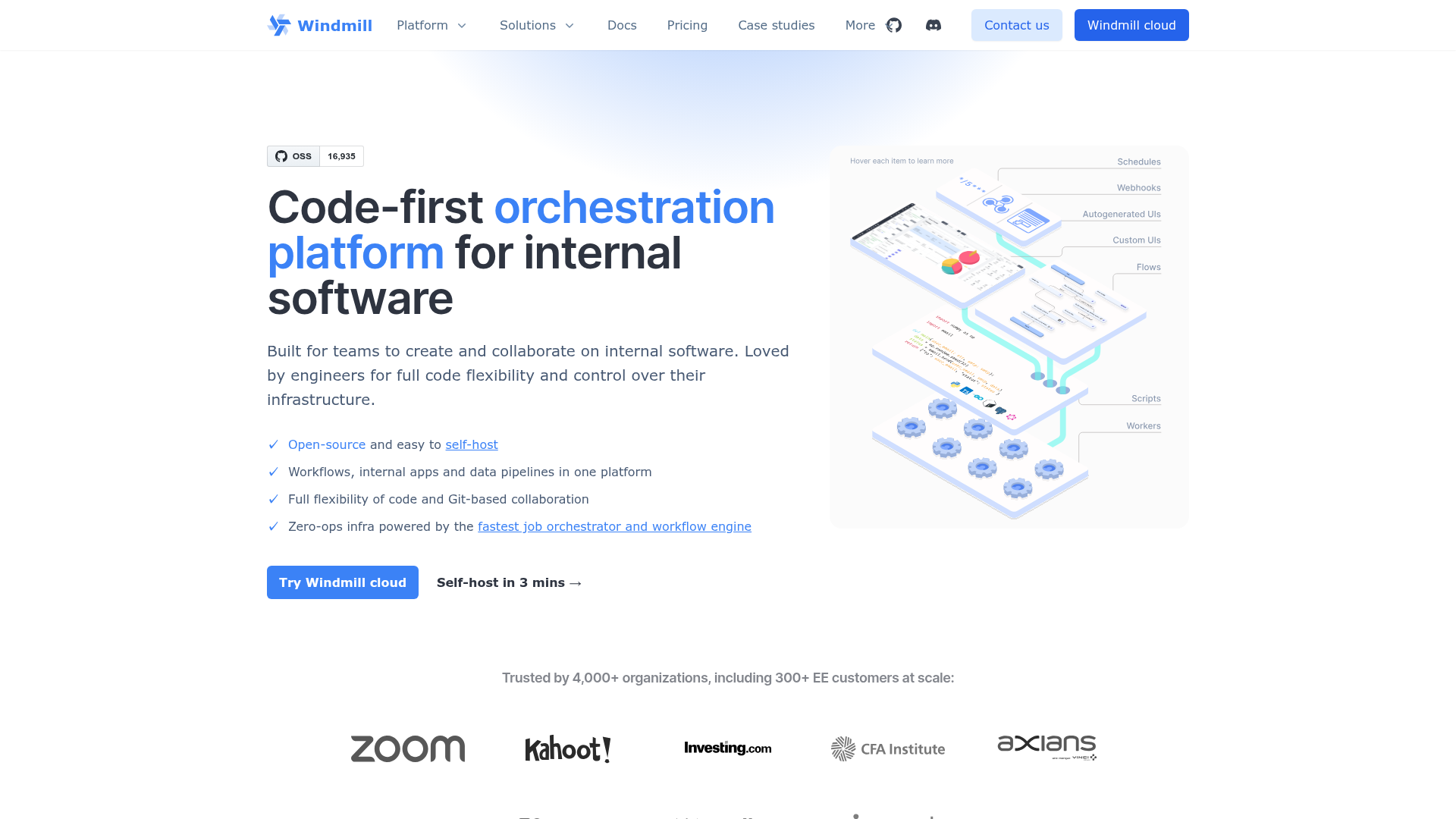
Windmill
Best for
Developer-led teams that want open-source workflow orchestration with scripting power.
Why it stands out
Windmill is flexible and appealing for internal tooling and script-based operations.
Trade-offs
It is not built with non-technical ecommerce operators as the primary user.
Bottom line
Useful in the right environment, but not the most accessible choice for merchant ops teams.
Which platforms are best for specific use cases?
Best for Shopify operations: MESA
If your core problem is reducing manual store work, improving data reliability, and scaling workflows without developers, MESA is the strongest fit.
Best general visual builder: Make
Strong flexibility for teams comfortable with more complex workflow canvases.
Best open-source option: n8n
A leading Zapier alternative open source choice for technical teams.
Best budget-first option: Activepieces or Pabbly Connect
Both are worth reviewing if affordability is your main concern.
Best enterprise governance: Workato
Useful for larger organizations with formal integration requirements.
A practical test: what happens when your workflow gets messy?
This is where many comparisons stop too early.
A clean demo is easy. Real operations are messy.
What happens when:
-
an order contains both preorder and in-stock items
-
inventory must sync across Shopify and a third-party system
-
a VIP customer needs a different post-purchase journey
-
a fraud signal triggers a manual review hold
-
a fulfillment status fails to update and support needs an alert
-
reporting data breaks because one field changed format
That is where generic automation tools often start to show strain. The more your workflows reflect actual commerce complexity, the more valuable a Shopify-first platform becomes.
For example, MESA lets merchants automate across areas like order automation, alerts, customer follow-up, and backend sync without turning every change request into a technical project. That keeps your operations team moving faster and lowers the risk of silent workflow failure.
Free and open-source options: what to know before choosing one
A lot of buyers specifically want a zapier free alternative or a zapier open source alternative. That is understandable. But free should not be your only filter.
Here is the trade-off in plain terms:
-
Free or open-source tools can reduce software cost
-
But they often increase setup, governance, maintenance, or support burden
For technical teams, that can be worthwhile.
For lean ecommerce teams, the hidden cost can be high:
-
more troubleshooting
-
more workflow ownership on internal staff
-
slower rollout times
-
greater risk around business-critical flows
That does not mean free options are bad. It means you should compare total effort, not just subscription fees.
When MESA is the better alternative to Zapier
MESA is the right move when:
-
Shopify is central to your business
-
your team wants to automate store operations without custom dev work
-
you need multi-step workflows, not just simple triggers
-
you want to describe what needs to happen and launch workflows quickly
-
you care about avoiding overselling, broken syncs, and missed notifications
-
you want real support from people who understand ecommerce automation
This is especially true when your team has already outgrown “quick connector” tools but is not looking to become an automation engineering department.
With MESA, you get the operational benefits of advanced automation while keeping the experience practical for ecommerce teams. The template library, support for 100+ integrations, and 300+ workflow templates reduce time to value. The result is faster setup, less manual work, cleaner reporting, and more resilient processes.
Final verdict
There is no single best Zapier alternative for every buyer in 2026. But there is a best one for your operating reality.
If you want a broad visual builder, Make is a strong option. If you want self-hosting and technical flexibility, n8n is one of the best choices. If you want enterprise integration depth, Workato belongs on the shortlist.
But if you run a Shopify store or ecommerce operation and your goal is to reduce manual work, improve reliability, and scale without handing every automation project to a developer, MESA is the most practical choice. It is purpose-built for the workflows merchants actually depend on.
If you are ready to move beyond generic automation and implement workflows that match how commerce really works, start by exploring MESA’s automation templates library. It is the fastest way to see how order handling, reporting, alerts, inventory sync, and customer follow-up can run with far less manual effort.