

Best Workflow Automation Software for Ecommerce
-
- •
- Jun. 24, 2026
- •
- 12 min read

Growing an ecommerce business usually doesn’t break because of strategy first. It breaks because of operations. Orders need tagging, fraud checks need routing, inventory needs syncing, support teams need alerts, finance needs exports, and customers expect fast, accurate follow-up across every step.
That’s why choosing the best workflow automation software for ecommerce matters. The right platform doesn’t just save clicks. It removes repetitive work, reduces preventable errors, and helps your team scale without turning every new process into a developer project.
For Shopify merchants especially, the best option is the one that fits real store operations: multi-step workflows, app-to-app coordination, inventory safeguards, fulfillment logic, reporting, and customer messaging. It should be easy enough for operators to use, but powerful enough to handle edge cases when your business gets more complex.
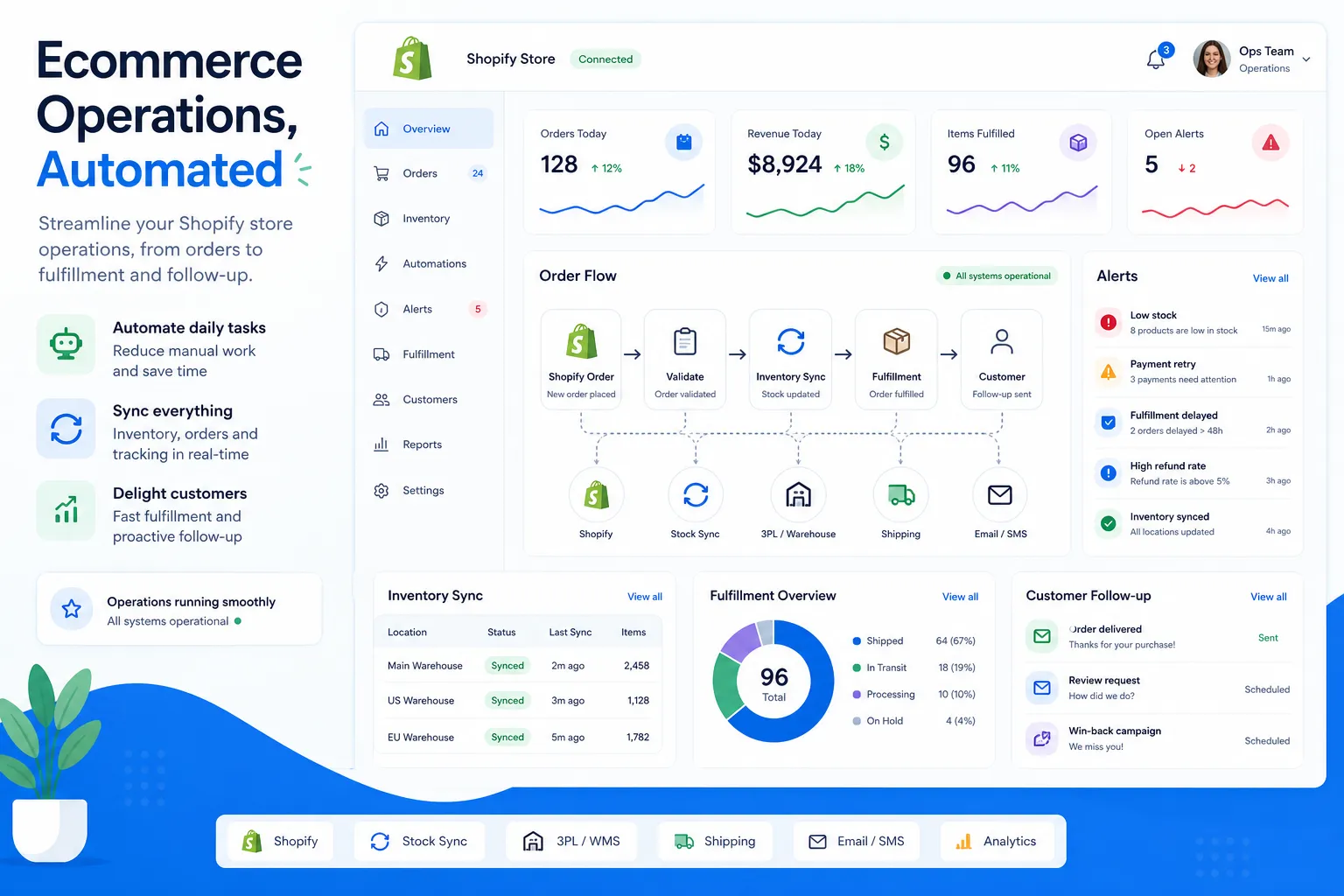
Table of Contents:
The short answer: what is the best workflow automation software for ecommerce?
The best workflow automation software for ecommerce is the platform that can automate repetitive store operations across Shopify and your app stack without requiring custom development. It should support real-world workflows like order routing, inventory sync, fulfillment updates, customer follow-up, reporting, and exception alerts.
For growing Shopify brands, that usually means moving beyond generic task tools and choosing a Shopify-first automation platform like MESA’s automation platform, which lets teams describe what they need accomplished, launch workflows quickly, and keep complex store operations running without constant manual intervention.
What the top-ranking articles get right, and what they miss
Most competitor roundups do a decent job of listing features like drag-and-drop builders, templates, integrations, and pricing. They also correctly point out that modern teams want no-code automation, AI assistance, and cross-functional workflows.
But there are a few major gaps.
They treat ecommerce like any other workflow category
General reviews often lump ecommerce in with marketing ops, HR approvals, and generic business process management. That misses the reality of store operations:
-
Order events happen in real time
-
Inventory mistakes can cause overselling
-
Fulfillment delays quickly affect customer experience
-
Data needs to stay consistent across Shopify, email, support, ERP, shipping, and spreadsheets
Ecommerce teams need automation that understands transactional workflows, not just internal task routing.
They focus too much on feature lists and not enough on failure points
Most “top workflow automation software” articles say a tool has integrations and branching logic. Fewer explain whether it can:
-
prevent broken data flows
-
catch exceptions before they become customer issues
-
handle multi-step logic across multiple systems
-
support merchants when workflows need tuning
Those are the details that matter in production.
They undersell implementation speed
A platform can be powerful on paper and still become shelfware if it takes too long to launch. Ecommerce operators are busy. The best workflow software should help teams move from “here’s what we need done” to a live workflow fast.
That is where MESA stands out. Instead of forcing teams to think like developers, it lets merchants describe what they need accomplished in plain English and turn that into live automations quickly with AI assistance and human support.
Why ecommerce automation has moved from “nice to have” to operational necessity
Automation is no longer just about efficiency theater. It affects margin, speed, accuracy, and retention.
“Automation reduces order fulfillment costs by 28% globally.” – ZipDo Education’s ecommerce automation statistics
That cost pressure matters when your team is manually exporting orders, updating tags, sending alerts, or reconciling data between tools.
It also matters because customer expectations keep rising.
“86% of consumers define fast delivery as two days or less, and 63% will switch retailers if they cannot receive their items within this timeframe.” – OnTrac’s 2023 consumer delivery expectations study
Fast delivery expectations are really operations expectations. If your workflows are slow, fragmented, or error-prone, customer experience suffers downstream.
The evaluation criteria that actually matter for ecommerce teams
If you’re comparing the best workflow automation tools, don’t start with the number of templates alone. Start with fit.
1. Shopify-first depth
Many tools can “connect” Shopify. Far fewer understand how merchants actually work inside it.
Look for automation software that can handle:
-
order tags and order notes
-
fulfillment holds and release logic
-
customer and product events
-
inventory thresholds
-
draft orders and post-purchase flows
-
app ecosystem triggers tied to Shopify activity
A Shopify-first platform will usually outperform a generic automation tool for ecommerce-specific jobs.
2. Multi-step workflow power
Simple one-trigger-one-action automations are useful, but limited. Ecommerce operations usually need branching logic.
A real workflow might look like this:
-
new order is created
-
check SKU mix and destination
-
apply tag based on warehouse rules
-
send Slack alert for exceptions
-
update Google Sheet log
-
notify fulfillment partner
-
trigger customer follow-up if item is delayed
That’s the kind of practical complexity the best workflow automation platform should support without becoming brittle.
3. App ecosystem coverage
Your store does not operate inside Shopify alone. You may need workflows across email, support, ERP, shipping, subscriptions, spreadsheets, loyalty, or CRM tools.
MESA supports 100+ apps and ecommerce systems, making it easier to coordinate processes across the tools merchants already use. For example, teams can automate exports and two-way updates with Google Sheets integrations for Shopify workflows when ops teams still rely on spreadsheets for visibility or handoff management.
4. Fast setup for non-developers
This is where many tools lose operators. If setup requires technical thinking, complex mapping, or too much trial and error, adoption drops.
The best workflow automation software for ecommerce should allow operators, CX teams, and operations managers to launch useful workflows without needing engineering resources every time.
5. Exception handling and error prevention
A workflow that runs 95% of the time but fails on edge cases creates hidden labor. You end up babysitting automation instead of benefiting from it.
Strong platforms help merchants avoid issues like:
-
missed inventory syncs
-
duplicate actions
-
incomplete customer updates
-
broken integrations
-
overselling due to slow or failed data transfer
6. Real support when workflows need tuning
This point is often missing from comparison posts. Templates are great. AI is helpful. But merchants still need real humans for setup and optimization, especially when workflows affect revenue or customer experience.
That support layer becomes a deciding factor once you move beyond basic automations.
The main types of workflow automation software in ecommerce
Not all automation platforms solve the same problem. Here’s the practical breakdown.
|
Platform type |
Best for |
Limitation for ecommerce |
|---|---|---|
|
Generic task/work management tools |
Internal approvals, team coordination, project operations |
Often weak on real-time store events and transactional logic |
|
Broad iPaaS/integration tools |
App connectivity across many systems |
Can be powerful, but often require more technical setup |
|
Email/SMS automation tools |
Marketing flows and lifecycle messaging |
Great for campaigns, but narrow for operational workflows |
|
Shipping/fulfillment automation tools |
Labels, routing, tracking, carrier workflows |
Usually focused on logistics only |
|
Shopify-first automation platforms |
Store operations, app coordination, order and inventory workflows |
Best fit for merchants, especially when operational depth matters |
For many Shopify merchants, the sweet spot is a Shopify-first automation platform that can still reach across the broader stack.
The best workflow automation software options for ecommerce teams
Below is a practical view of leading tools merchants may compare.
MESA
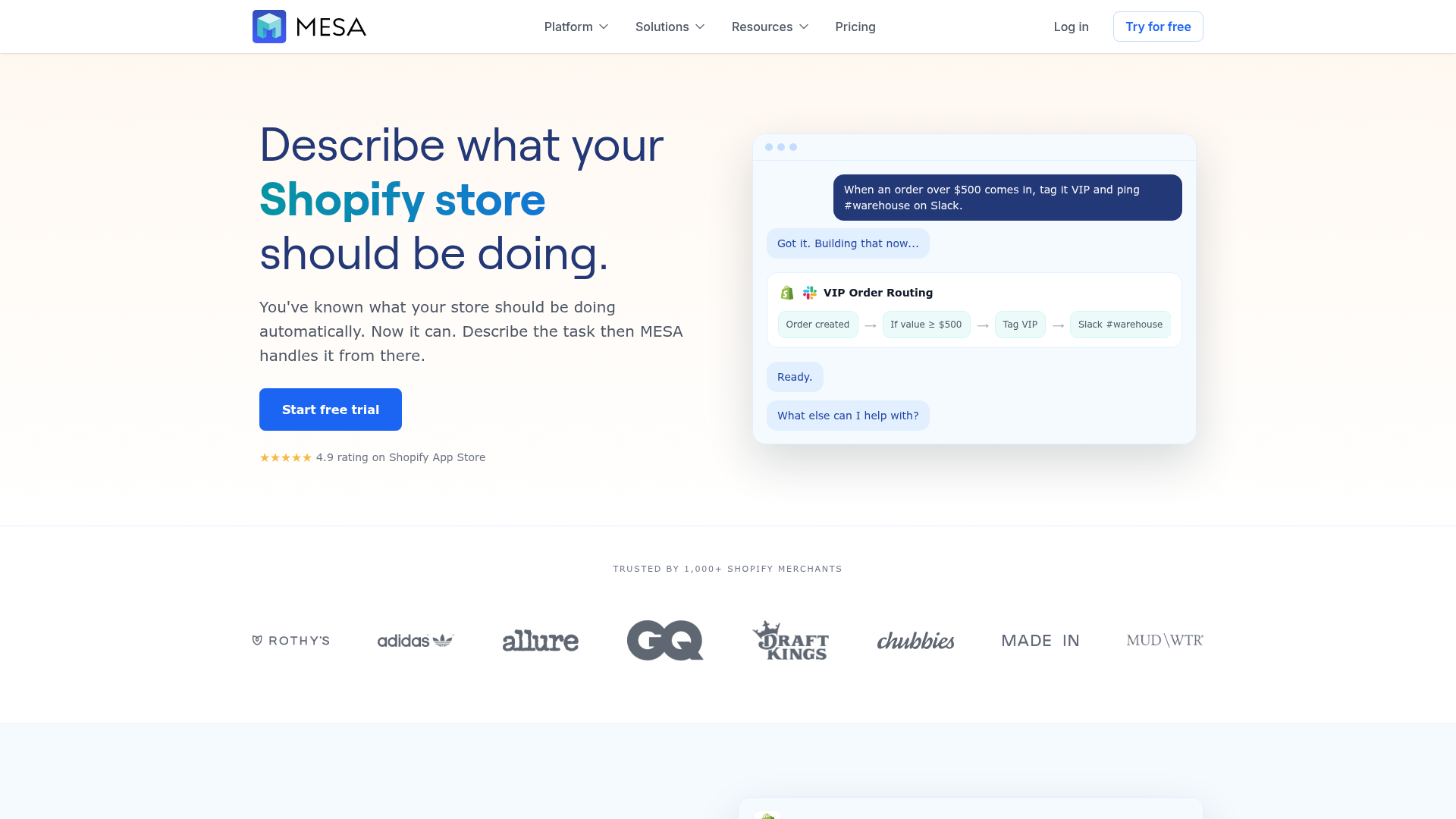
MESA is the strongest fit for Shopify merchants who want operational automation without needing a developer for every workflow. Its biggest differentiator is that you can describe what you need accomplished in plain English and turn that request into a live workflow quickly.
It is especially strong for:
-
order automation
-
inventory management
-
fulfillment operations
-
customer experience workflows
-
reporting and alerting
-
data movement across Shopify and connected tools
MESA also includes 300+ ready-made templates for fast setup, so merchants don’t have to build from scratch unless they want to. If your team has outgrown lightweight automation but doesn’t want the burden of custom engineering, MESA is the logical next step.
Best for: Shopify merchants that need speed, operational depth, and flexibility
monday.com
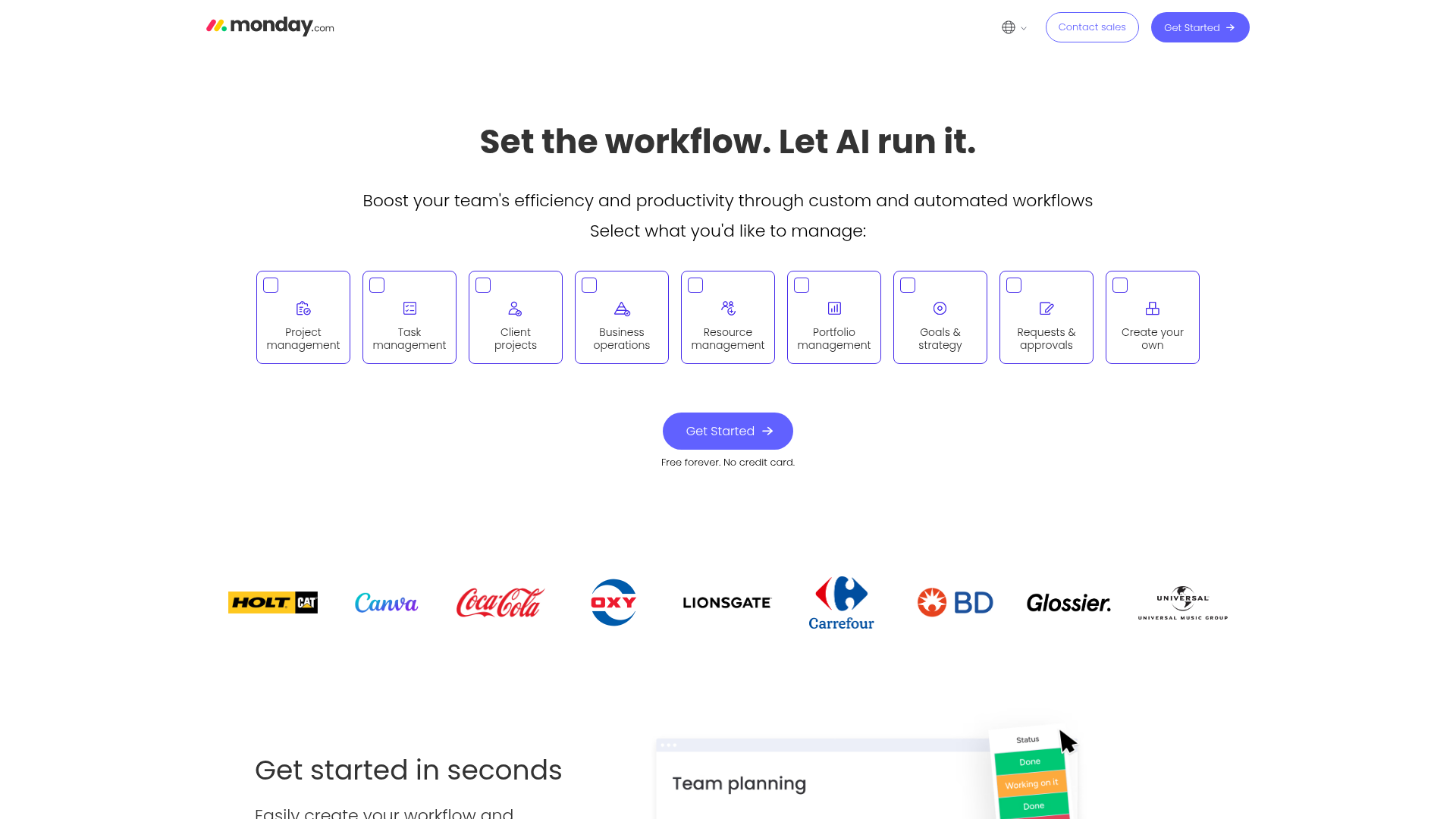
monday.com is strong for process standardization and internal workflow visibility. It’s useful if your ecommerce team wants structured project management plus automations around task movement and notifications.
Where it’s less ideal is deep transactional store automation. It can support ecommerce-adjacent workflows, but it is not built around Shopify operational events in the same native way.
Best for: cross-functional internal coordination
ClickUp
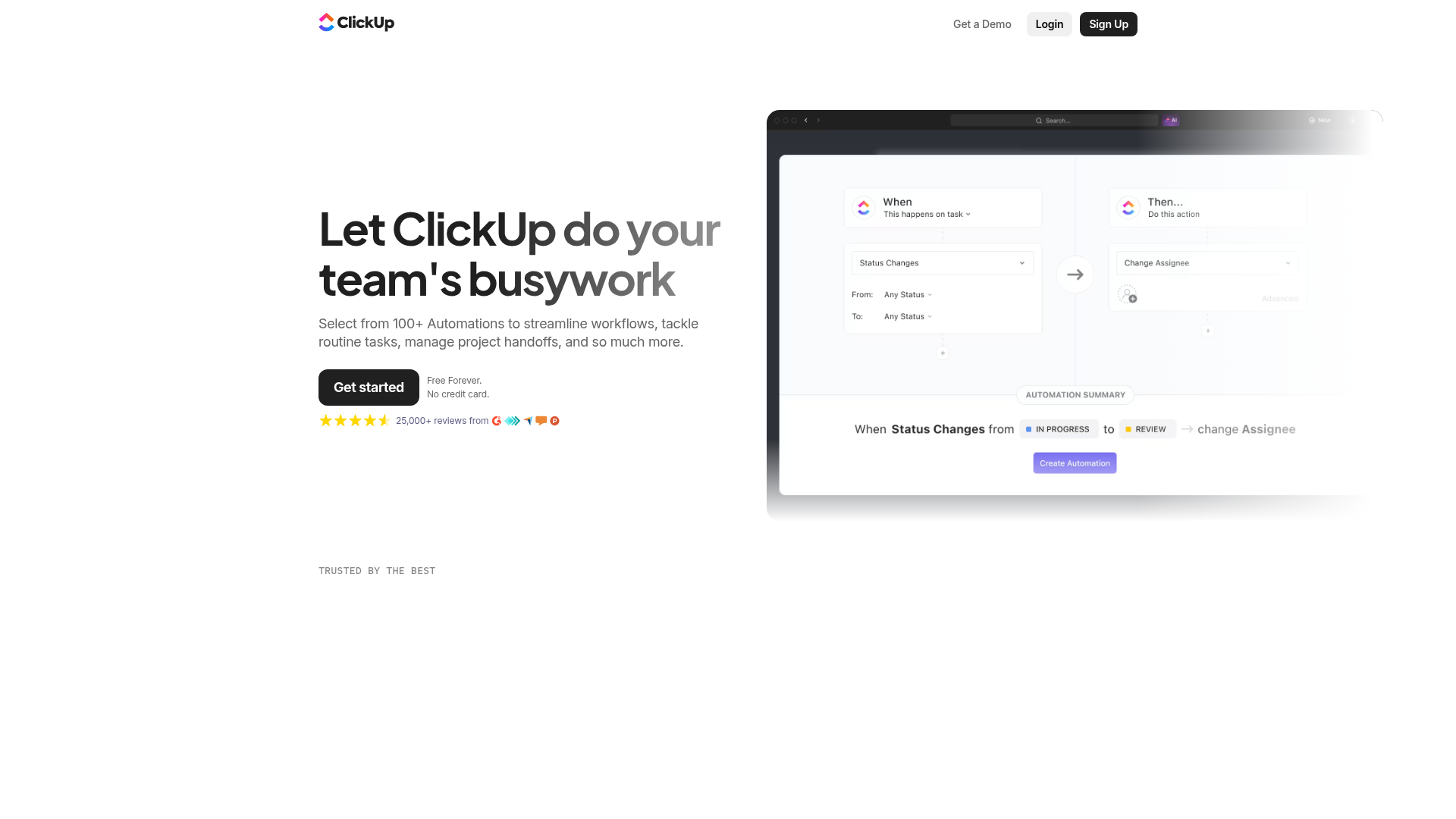
ClickUp offers flexible automation inside a broader work management environment. It’s popular with teams that want task tracking, documentation, and basic operational rules in one place.
For ecommerce operators, its strengths are around team organization more than store-native automation. It can complement your stack, but usually won’t replace a Shopify-centered workflow engine.
Best for: teams wanting a project management hub with automation features
Smartsheet
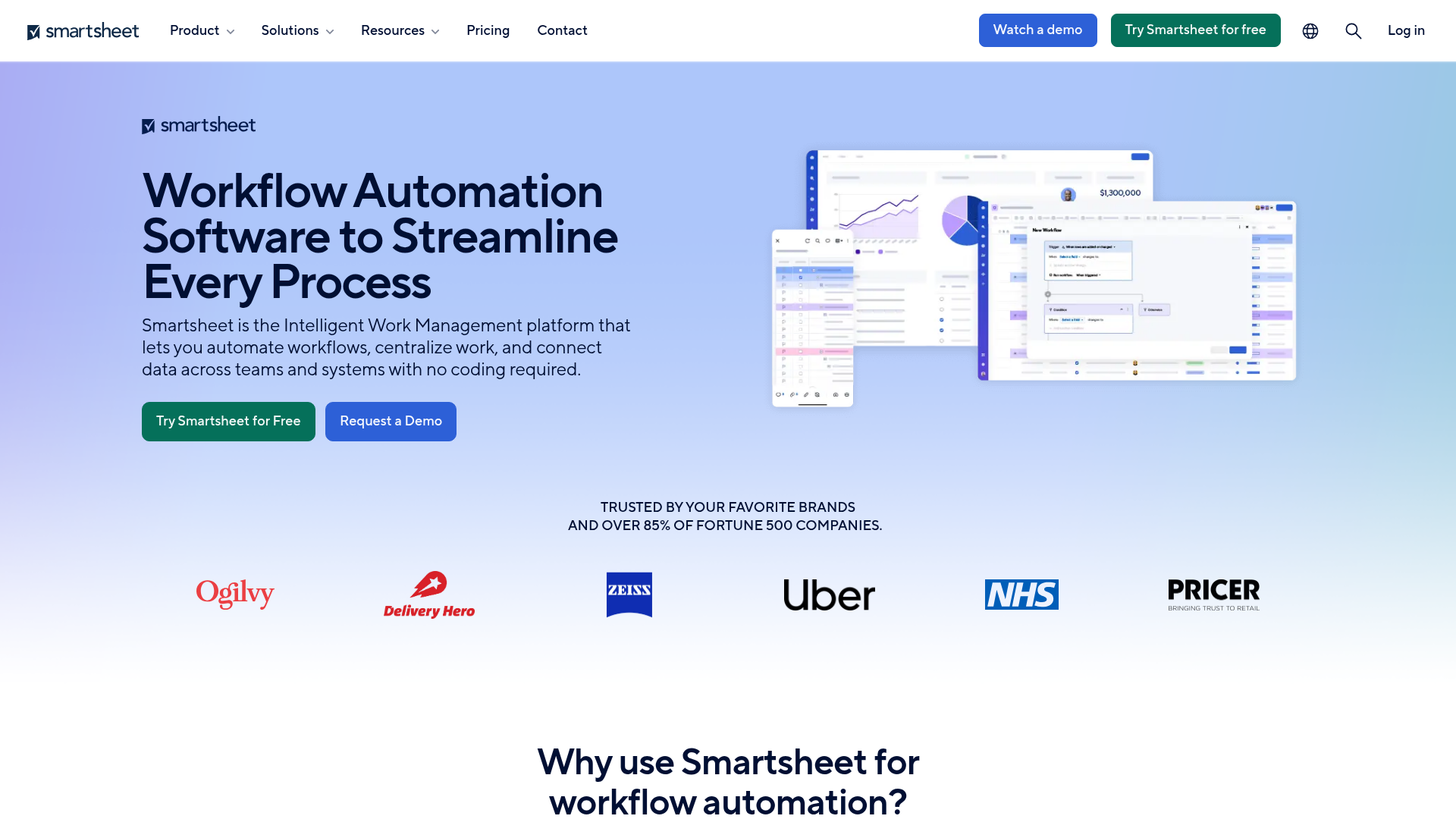
Smartsheet remains attractive for spreadsheet-oriented teams that want dashboards, automation rules, and structured workflows. Some operations teams like it because it feels familiar.
Its limitation is similar: it is better at coordinating work than running a Shopify store’s operational backbone across apps and live events.
Best for: spreadsheet-centric operations teams
Qntrl

Qntrl is designed for cross-functional orchestration and business process control. It’s suitable for companies that want formalized workflows with approvals, stage transitions, and governance.
For pure ecommerce use, it can feel heavier than necessary unless you have complex enterprise process requirements outside the storefront.
Best for: structured business process orchestration
How MESA compares for merchants who have outgrown simpler tools
Many ecommerce teams start with lightweight automation, manual exports, or isolated app rules. That works for a while. Then complexity catches up.
You add more channels. More SKUs. More staff. More exceptions. More systems.
That’s when the “best workflow automation” question changes from “Can this automate something?” to “Can this run operations reliably?”
Where simpler tools usually start to strain
-
one app can’t see what another app is doing
-
teams maintain workarounds in spreadsheets
-
notifications happen, but actions don’t
-
logic breaks when edge cases appear
-
no one knows who owns workflow maintenance
-
launching new processes takes too long
MESA is built for that next stage. It supports complex multi-step automations, lets teams launch workflows faster through AI and templates, and provides human support when a process needs to be adapted to your store.
If you are deciding between general-purpose platforms and Shopify-native automation, it can also help to review how MESA stacks up against alternatives like MESA vs Shopify Flow, especially if your workflows need to extend beyond native Shopify capabilities or coordinate with a broader app ecosystem.
The workflows that deliver the fastest ROI in ecommerce
Not every automation project deserves to go first. Start where manual work is frequent, error-prone, and tied to customer impact.
Order handling
Examples:
-
tag high-risk or expedited orders
-
route orders by SKU, market, or warehouse
-
hold specific orders for manual review
-
notify ops or CX teams about exceptions
Inventory sync
Examples:
-
update stock across connected systems
-
alert teams when thresholds are hit
-
pause promotions when stock is too low
-
reduce overselling risk across channels
Fulfillment operations
Examples:
-
trigger downstream tasks after fulfillment events
-
notify customers about delays or split shipments
-
send internal alerts when SLAs are at risk
-
sync tracking data to support systems
Customer follow-up
Examples:
-
post-purchase review requests
-
VIP follow-up flows
-
delay notices with proactive messaging
-
customer tags based on order behavior
Reporting and visibility
Examples:
-
export orders or exceptions to Sheets
-
send daily summary reports to Slack
-
log failed states for manual resolution
-
track operational KPIs without manual compilation
MESA has dedicated solutions across these categories, including order automation workflows for Shopify operations, which is one reason it fits ecommerce teams better than general workflow tools.
What to ask before you commit to a platform
A polished demo is not enough. Ask these questions.
Can our ops team launch workflows without engineering?
If the answer is no, your bottleneck may simply move from manual work to technical backlog.
Can the platform handle both simple and complex workflows?
You want a tool that is easy to start with but doesn’t force a migration later.
How well does it work with our current stack?
Make a list of the systems that matter most: Shopify, support, email, ERP, warehouse, subscriptions, reporting, spreadsheets.
What happens when a workflow fails?
Ask about logs, alerts, retries, exception handling, and support.
How fast can we get value?
Templates, AI-assisted setup, and onboarding help are not “nice extras.” They directly affect adoption and ROI.
A practical scoring framework for ecommerce buyers
Use this simple framework when comparing vendors.
|
Criterion |
Why it matters |
Weight |
|---|---|---|
|
Shopify operational depth |
Determines whether the tool fits real store workflows |
High |
|
Multi-step logic |
Needed for non-trivial ecommerce automation |
High |
|
App integrations |
Reduces manual handoffs across systems |
High |
|
Ease of setup |
Speeds time to value for ops teams |
High |
|
Template library |
Reduces build time and risk |
Medium |
|
AI assistance |
Helps teams launch workflows faster |
Medium |
|
Support quality |
Critical when workflows affect revenue |
High |
|
Internal work management features |
Useful, but secondary for store automation |
Low to medium |
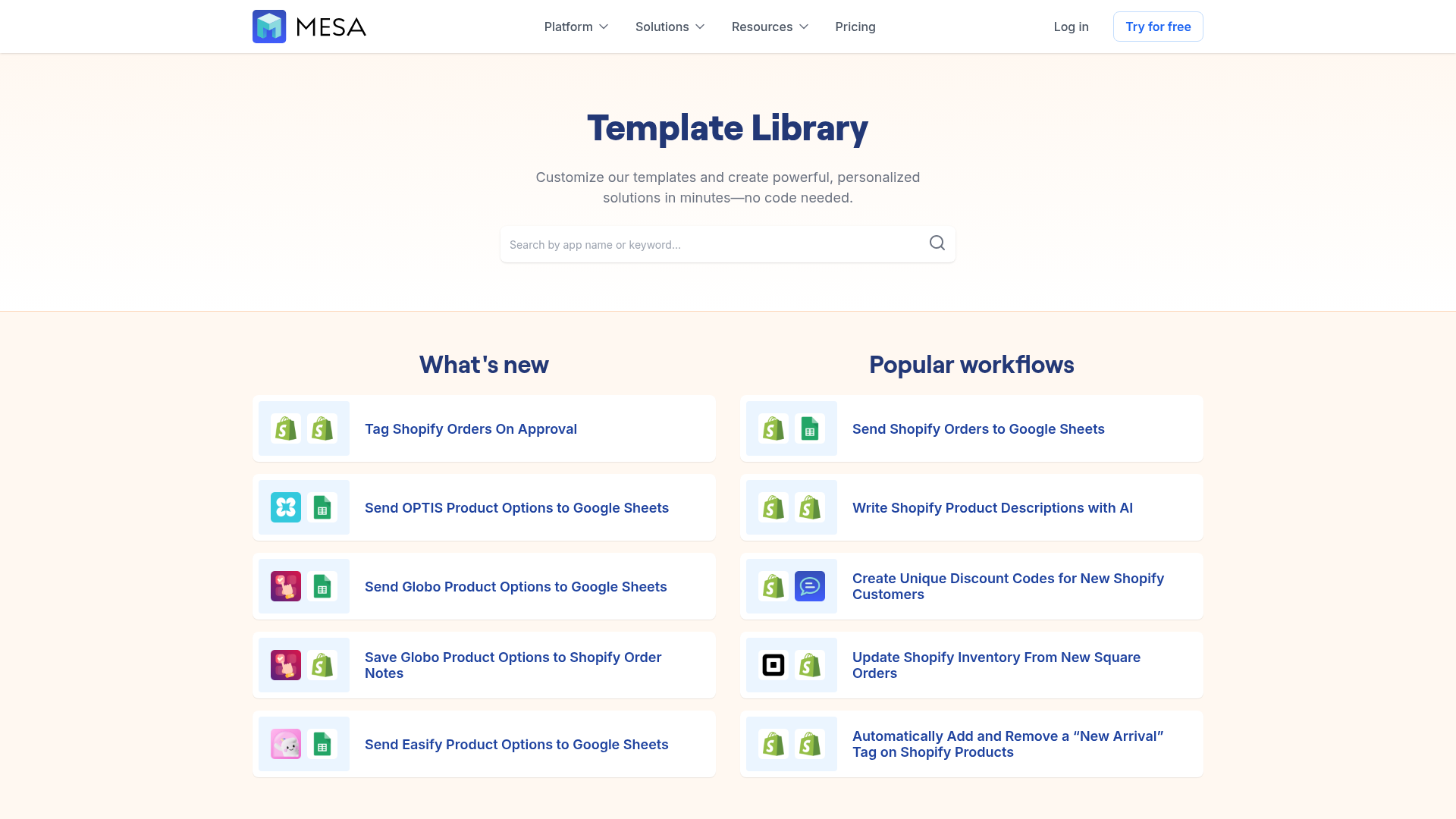
This is also where MESA’s workflow template library deserves attention. Having 300+ ready-made templates changes the speed equation dramatically for busy merchants.
The hidden cost of choosing the wrong automation tool
The wrong platform rarely fails all at once. It fails gradually.
-
Automations get built, but no one trusts them
-
Teams still run manual checks “just in case”
-
Exceptions pile up in Slack or email
-
Inventory errors create customer-facing problems
-
Reporting remains fragmented
-
Ops leaders become workflow janitors
That means you are paying twice: once for software, and again for manual work that should have disappeared.
The best workflow automation platform for ecommerce should reduce operational drag, not disguise it.
Final verdict
If you’re comparing the best workflow automation software for ecommerce, the right answer depends on what you need automated.
If you want internal task workflows, project tools like monday.com, ClickUp, or Smartsheet may help. If you need broader business process control, platforms like Qntrl may fit. But if your real problem is Shopify operations – orders, inventory, fulfillment, customer follow-up, alerts, and cross-app coordination – then a Shopify-first platform is the better category.
That is why MESA is the strongest choice for many ecommerce merchants. It helps non-developers automate repetitive Shopify tasks, supports complex multi-step workflows, connects with 100+ apps, offers 300+ ready-made templates, and provides real human support when workflows need to be refined. Most importantly, it helps your team describe what they need accomplished and get live automations running quickly.
If your team is spending too much time on manual operations, the next step is simple: explore MESA, review the templates that match your workflows, and start automating the work that keeps slowing your store down.