Best No Code Automation Tools for Growing Teams
-
- •
- May. 15, 2026
- •
- 12 min read

Table of Contents:
Best No Code Automation Tools for Growing Teams
Growing teams hit the same wall fast: more orders, more systems, more edge cases, and not enough people to keep everything moving manually.
That is exactly where no code automation tools earn their place. The right platform helps your team connect apps, eliminate repetitive work, reduce mistakes, and keep operations moving without waiting on developers. For ecommerce brands, that can mean automating order routing, inventory sync, reporting, alerts, customer follow-up, and internal notifications across a messy app stack.
For Shopify merchants in particular, the stakes are higher. One broken workflow can mean overselling inventory, delayed fulfillment, customer service issues, or data getting out of sync across platforms. So choosing a no code automation platform is not just about convenience. It is about operational resilience.
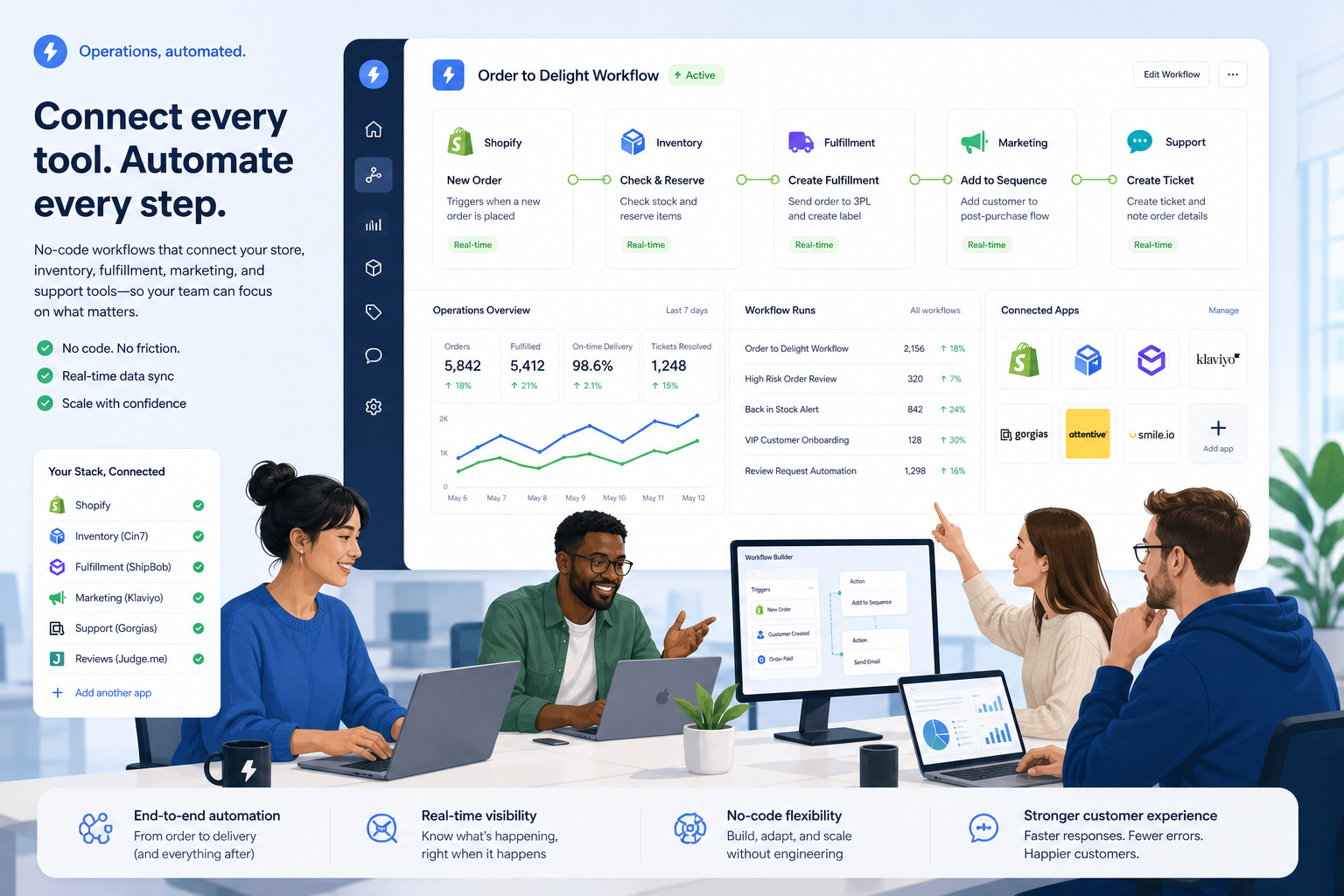
The best tools do more than connect one app to another. They help teams scale workflows across fulfillment, marketing, operations, customer support, finance, and reporting. Even better, modern platforms now let you describe what you want in plain English and turn it into working automation in minutes.
“Small and medium-sized businesses save an average of 240 hours per employee annually through workflow automation.” – adai.news
“Automated processes have led to a 90% reduction in errors compared to manual workflows.” – adai.news
This guide breaks down what no code automation actually means, how it helps growing teams, and which tools are worth considering if you want to streamline workflows without adding engineering backlog.
What are no code automation tools?
No code automation tools are platforms that let you build workflows between apps, systems, and data sources without writing custom code.
Instead of asking a developer to build an integration or script, you use a visual builder, templates, or AI prompts to create logic like:
-
when an order is tagged in Shopify, notify Slack
-
when inventory drops below a threshold, update a sheet and alert a buyer
-
when a VIP order is placed, trigger a fulfillment rule and customer follow-up
-
when customer data changes in one system, sync it everywhere else
For growing teams, that means fewer manual handoffs and less dependency on engineering for everyday operations.
What no code automation usually includes
Most platforms include some combination of:
-
triggers from apps like Shopify, Slack, Gmail, HubSpot, Klaviyo, or Google Sheets
-
logic steps such as filters, branches, delays, lookups, and conditions
-
actions that update records, send messages, create tasks, or move data
-
templates to launch common workflows faster
-
integrations with third-party apps and internal tools
-
AI assistance for building, editing, or debugging workflows
Why no code automation matters more for growing teams
When a team is small, manual work feels manageable. But as order volume, app complexity, and customer expectations grow, manual processes multiply faster than headcount.
Growing teams often struggle with:
-
repetitive order operations
-
inventory mismatches across systems
-
delayed customer communications
-
inconsistent internal reporting
-
support teams chasing missing order context
-
operations bottlenecks that sit in spreadsheets or inboxes
No code automation helps solve these without forcing the business to hire developers for every operational fix.
What competitor guides get right – and what they usually miss
Most top-ranking articles on no code automation tools do a decent job of listing popular platforms like Zapier, Make, and n8n. They typically cover pricing, integrations, and who each tool is best for.
That is useful, but it leaves a few important gaps:
Common themes in competitor content
Across the leading articles, the same ideas show up repeatedly:
-
no code tools reduce manual work
-
Zapier is easiest for beginners
-
Make is good for visual multi-step workflows
-
n8n is flexible for technical users
-
enterprise tools add governance and scale
-
AI is becoming a bigger part of automation
The biggest content gaps
Here is what many articles gloss over:
-
They are too general.
Most comparisons are written for broad business audiences, not for ecommerce teams with operational complexity. -
They rarely explain failure risk.
Automation is not just about saving time. It is also about preventing broken data flows, overselling, duplicate actions, and downstream operational errors. -
They underplay workflow depth.
A lot of teams need more than “trigger + action.” They need branching logic, approvals, multi-app sync, and exception handling. -
They do not focus enough on implementation speed.
It matters whether a team can go from idea to live workflow in minutes or whether they need a consultant, admin, or developer. -
They overlook support.
For growing merchants, human help matters. A platform can have all the features in the world, but if nobody helps optimize the workflow, time-to-value slows down.
That is why this guide takes a more practical angle, especially for Shopify and ecommerce operations teams.
How no code automation helps growing teams reduce manual work
No code automation is most valuable when it removes tasks that are repetitive, time-sensitive, and easy to break manually.
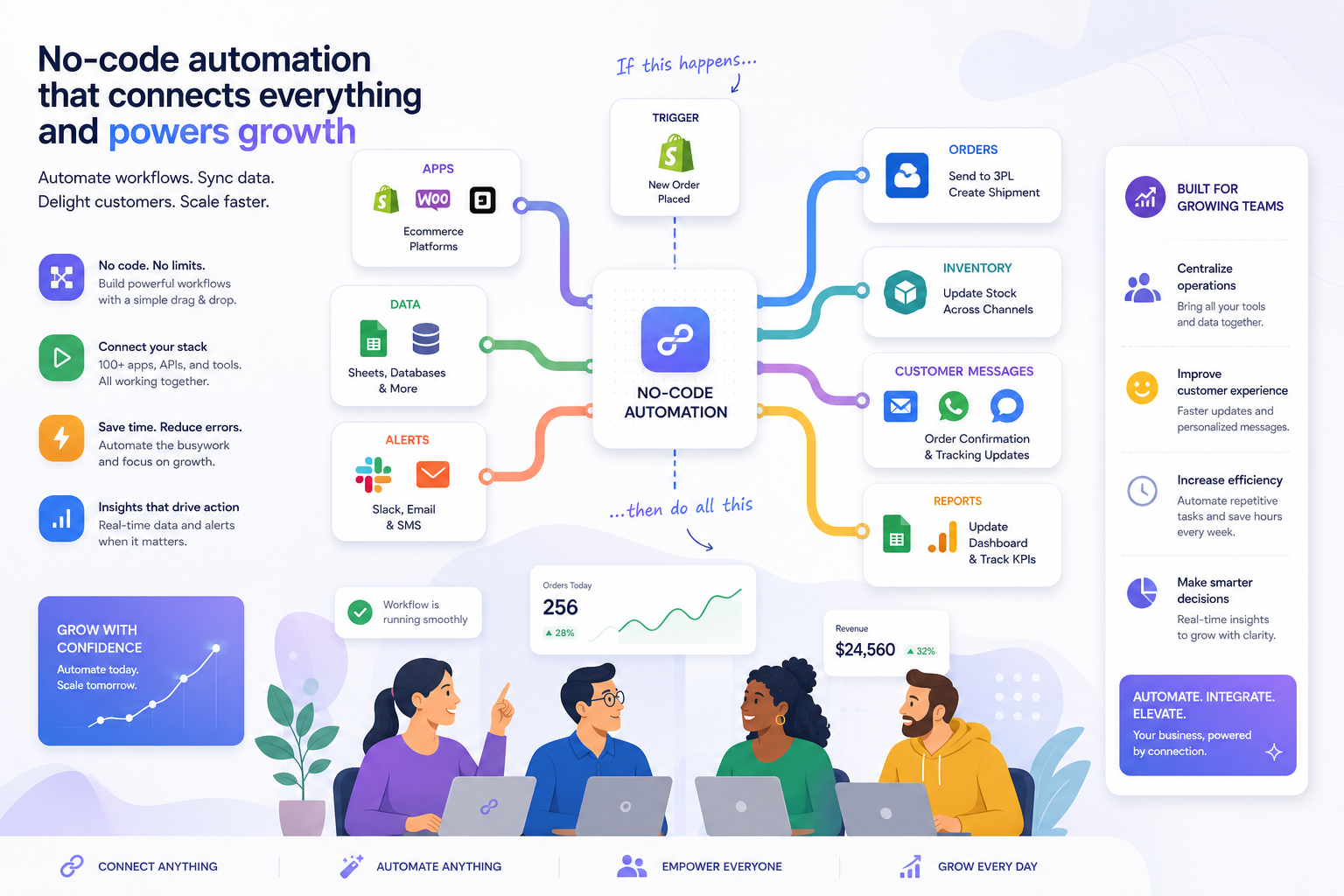
1. It reduces operational backlog
When teams rely on developers for every integration or workflow change, the backlog grows fast. No code automation lets ops and ecommerce teams launch changes themselves.
2. It standardizes execution
Workflows happen the same way every time. That means fewer missed steps in fulfillment, support escalation, reporting, or post-purchase communication.
3. It improves data consistency
Automation keeps systems aligned. If order, inventory, customer, or shipping data changes in one tool, the right platform can sync it everywhere else.
4. It cuts avoidable errors
Manual copy-paste work introduces mistakes. Automation reduces the chance of bad tags, missed alerts, duplicate entries, and broken handoffs.
5. It helps teams scale without adding headcount as quickly
You still need people. But you need fewer people doing repetitive administrative work, and more people focused on exceptions, customer experience, and growth.
What to look for in the best no code automation tool
Not every platform is built for the same kind of team. A startup moving leads between SaaS apps has different needs than a Shopify merchant coordinating inventory, shipping, marketing, and support.
Here is what matters most.
Ease of setup
Can a non-technical user build something useful quickly?
Workflow depth
Can the platform handle multi-step logic, conditional rules, approvals, and exceptions?
Integration coverage
Does it connect to the tools you already use?
Templates
Can you launch proven automations without building from scratch?
AI workflow building
Can you describe what you want in plain English and get a live workflow fast?
Reliability
Does the platform help prevent broken syncs, duplicate actions, and operational blind spots?
Support
Is there real human help when you need workflow setup or optimization guidance?
Best no code automation tools for growing teams
Below are the tools most often considered by growing teams. Each serves a different use case.
1. MESA
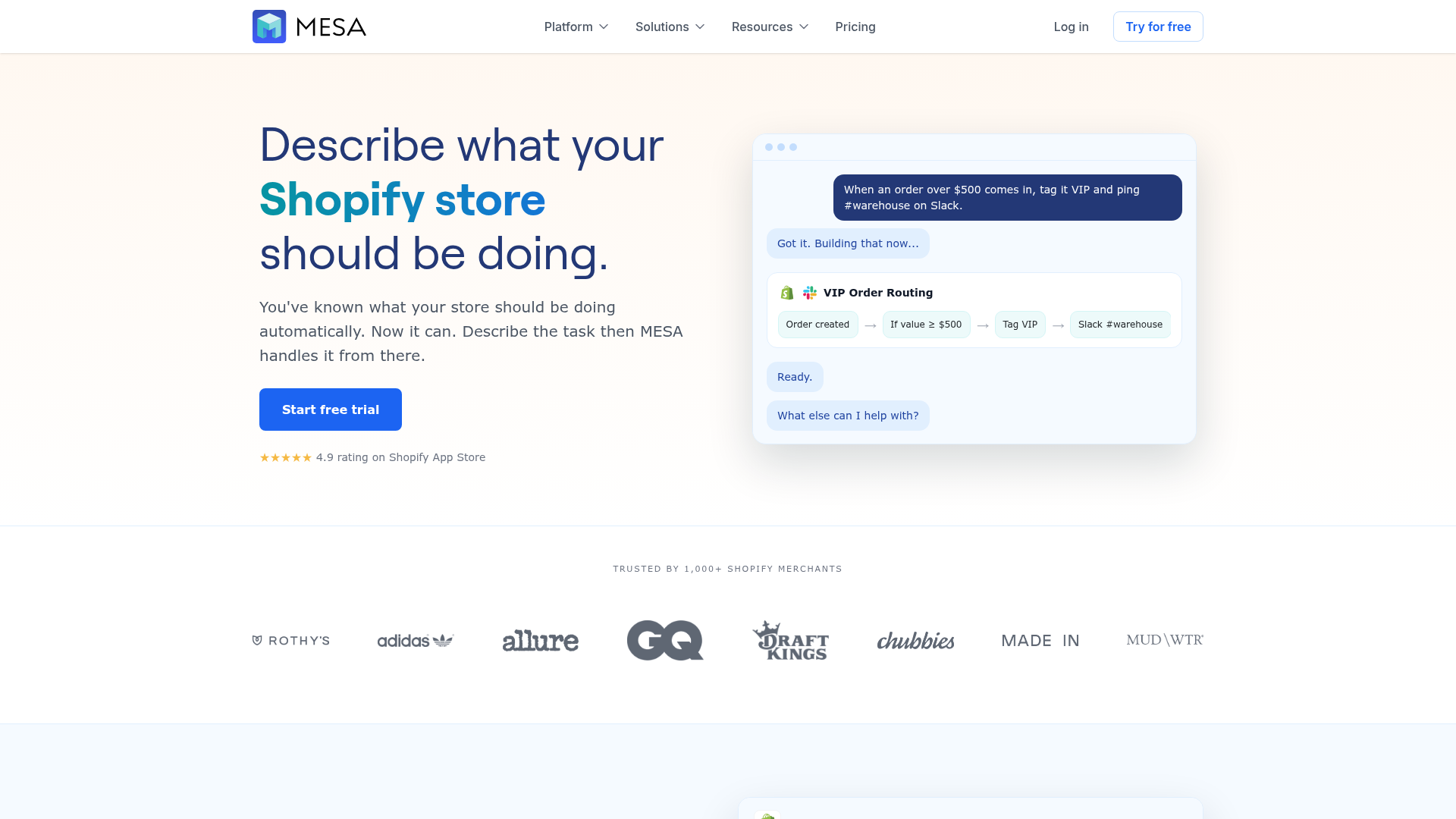
MESA stands out because it is built specifically for Shopify and ecommerce automation, rather than trying to be a generic tool for every business type.
For merchants and operations teams, that focus matters. MESA is designed to automate the daily workflows that actually slow down ecommerce teams: order handling, inventory updates, fulfillment coordination, alerting, reporting, customer messaging, and app-to-app data sync.
What makes it especially compelling is how fast it can turn intent into execution. Instead of building everything manually, merchants can describe what they want in plain English, and MESA can generate a live workflow. Its AI assistant, Yedric, helps teams go from request to automation without requiring custom development.
Best for
-
Shopify merchants
-
growing ecommerce brands
-
operations teams
-
fulfillment and CX teams
-
enterprise merchants with complex Shopify workflows
Why MESA is a strong fit for growing teams
-
Shopify-first design: built for ecommerce workflows, not adapted as an afterthought
-
Plain-English automation building: teams can explain what they want and get a workflow quickly
-
300+ ready-made templates: faster time-to-value for common store operations
-
100+ integrations: connects Shopify with tools like Slack, Google Sheets, Klaviyo, Airtable, Odoo, HubSpot, ShipStation, and more
-
Complex multi-step automation: supports more than simple one-step triggers
-
Human support: real people help with workflow setup and optimization
-
Operational safeguards: helps reduce broken data flows, missed updates, and overselling risk
Where MESA shines
For ecommerce businesses, MESA is not just about automation volume. It is about operational fit.
Examples include:
-
route orders based on tags, locations, or product logic
-
sync inventory and product data across systems
-
send alerts when exceptions happen
-
update spreadsheets or ERPs automatically
-
trigger post-purchase communication based on order events
-
keep support and fulfillment teams informed in Slack
-
reduce manual reporting and repetitive admin tasks
If your business runs on Shopify and you want automation without relying on a developer, MESA is one of the strongest options available.
2. Zapier
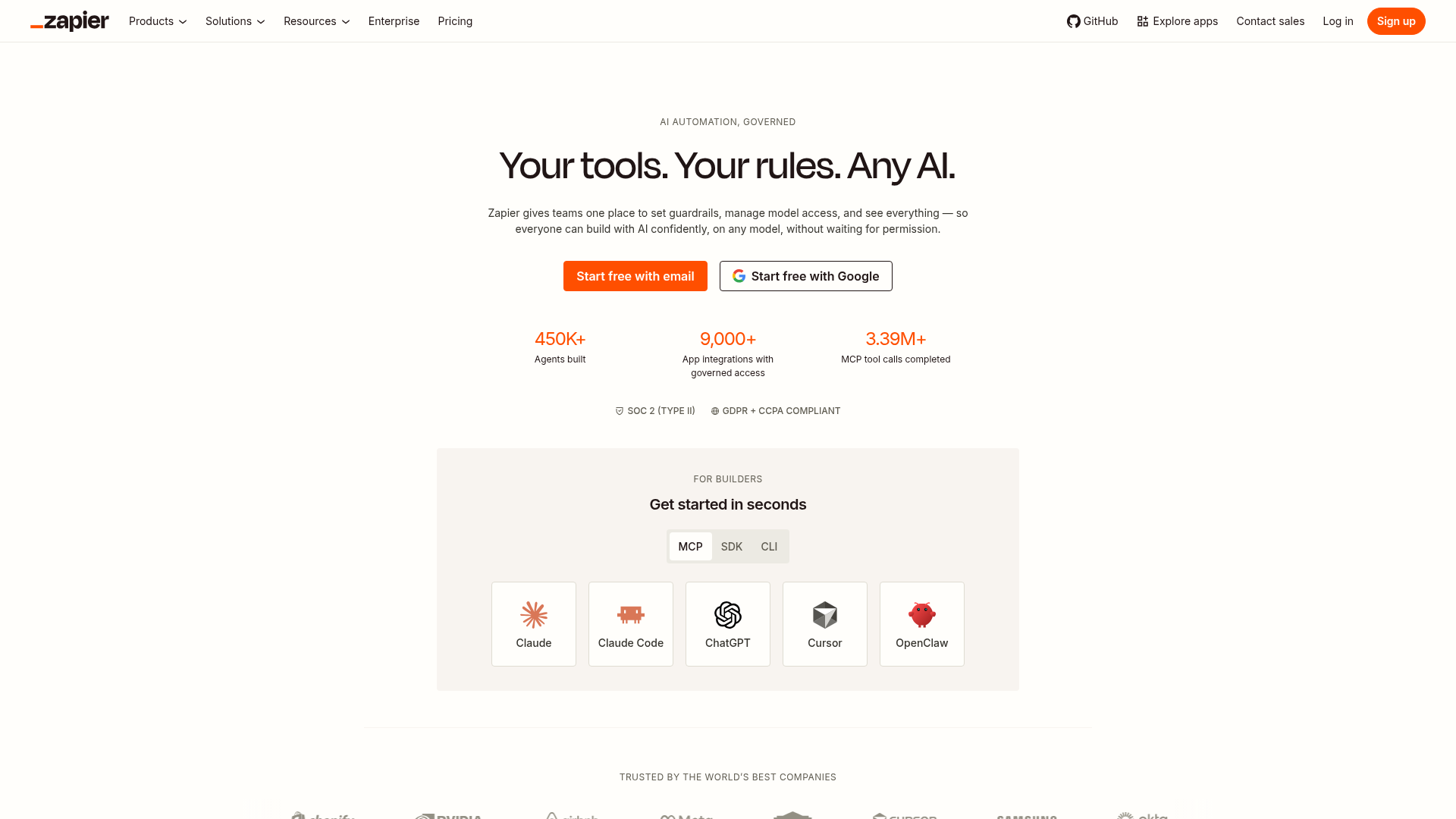
Zapier is often the first tool people think of when they hear no code automation tools. It is popular for a reason: it is simple, widely adopted, and has a very large integration library.
Best for
-
general business automation
-
simple app-to-app workflows
-
non-technical teams getting started
Strengths
-
easy to learn
-
massive connector library
-
fast for lightweight workflows
-
strong template ecosystem
Limitations
For growing ecommerce operations, Zapier can become limiting when workflows require deeper Shopify logic, advanced multi-step handling, or specialized operational support. It is great for straightforward automations, but less tailored for Shopify-first process design.
3. Make
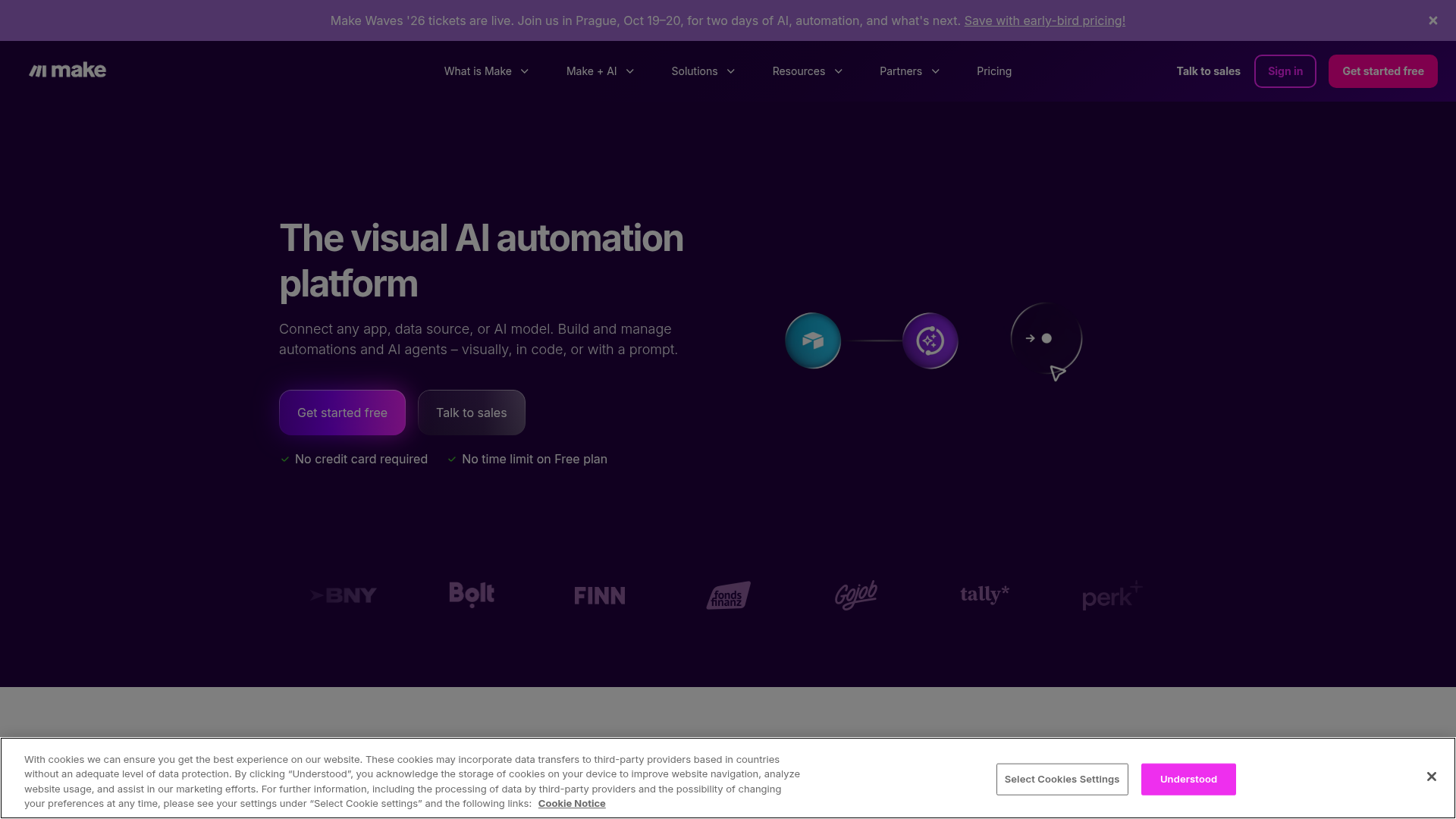
Make is popular with power users who want more visual control over complex workflows.
Best for
-
teams that want visual branching logic
-
users comfortable managing more detailed scenarios
-
high-volume operational workflows outside ecommerce-specific use cases
Strengths
-
strong visual builder
-
robust routing and branching
-
flexible data mapping
-
affordable entry pricing
Limitations
Make can feel more technical for non-technical users, especially when workflows get large. It also lacks the Shopify-first workflow focus and hands-on merchant support that ecommerce teams often need.
4. n8n
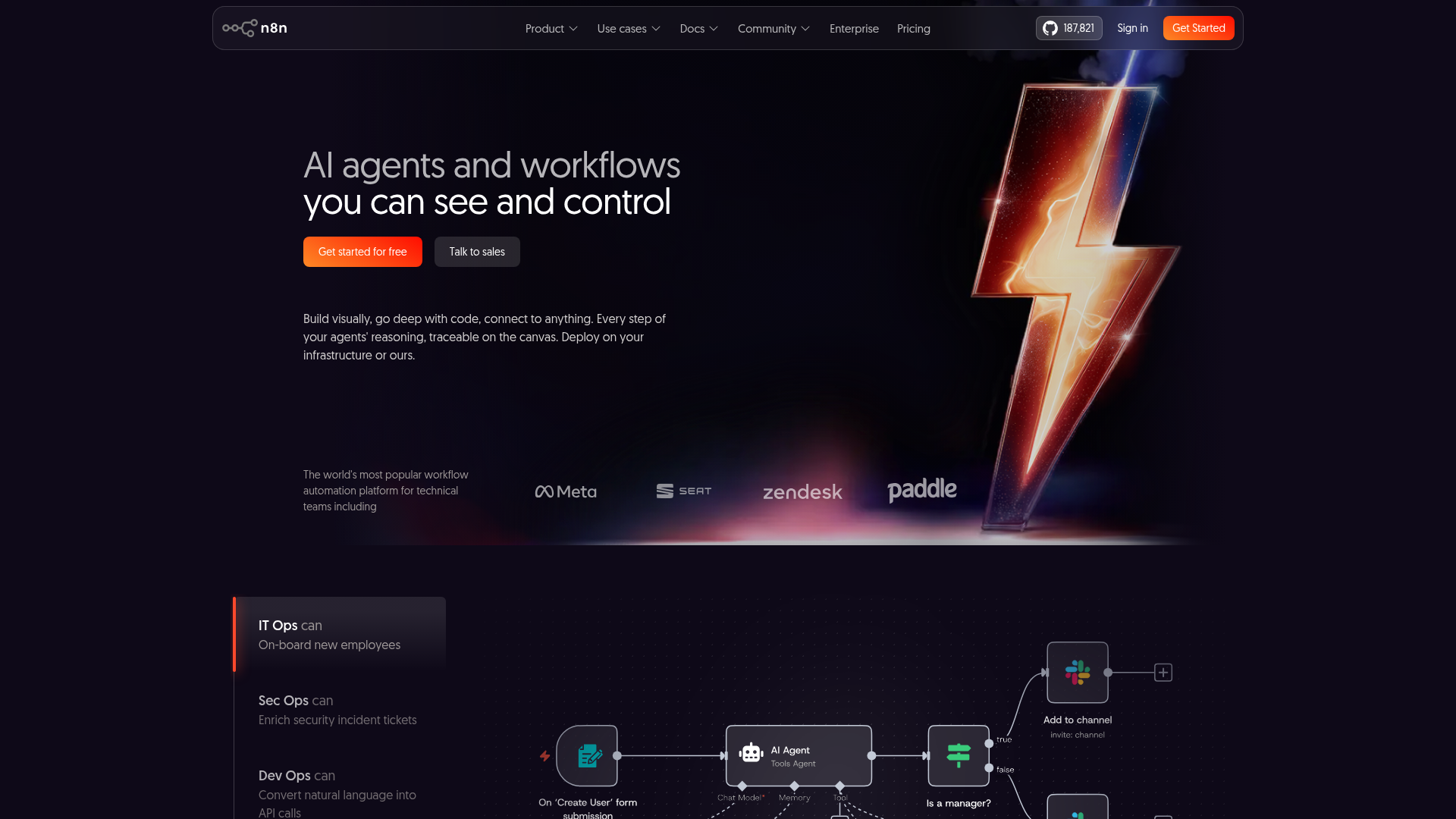
n8n is a favorite among more technical teams that want flexibility and self-hosting options.
Best for
-
technical or semi-technical teams
-
companies wanting self-hosting
-
businesses that need more custom logic control
Strengths
-
open-source roots
-
high flexibility
-
developer-friendly extensions
-
strong community
Limitations
n8n is less approachable for merchants or operations managers who want fast, low-friction workflow setup. It is powerful, but it usually works best when someone on the team is comfortable with a more technical environment.
5. Workato
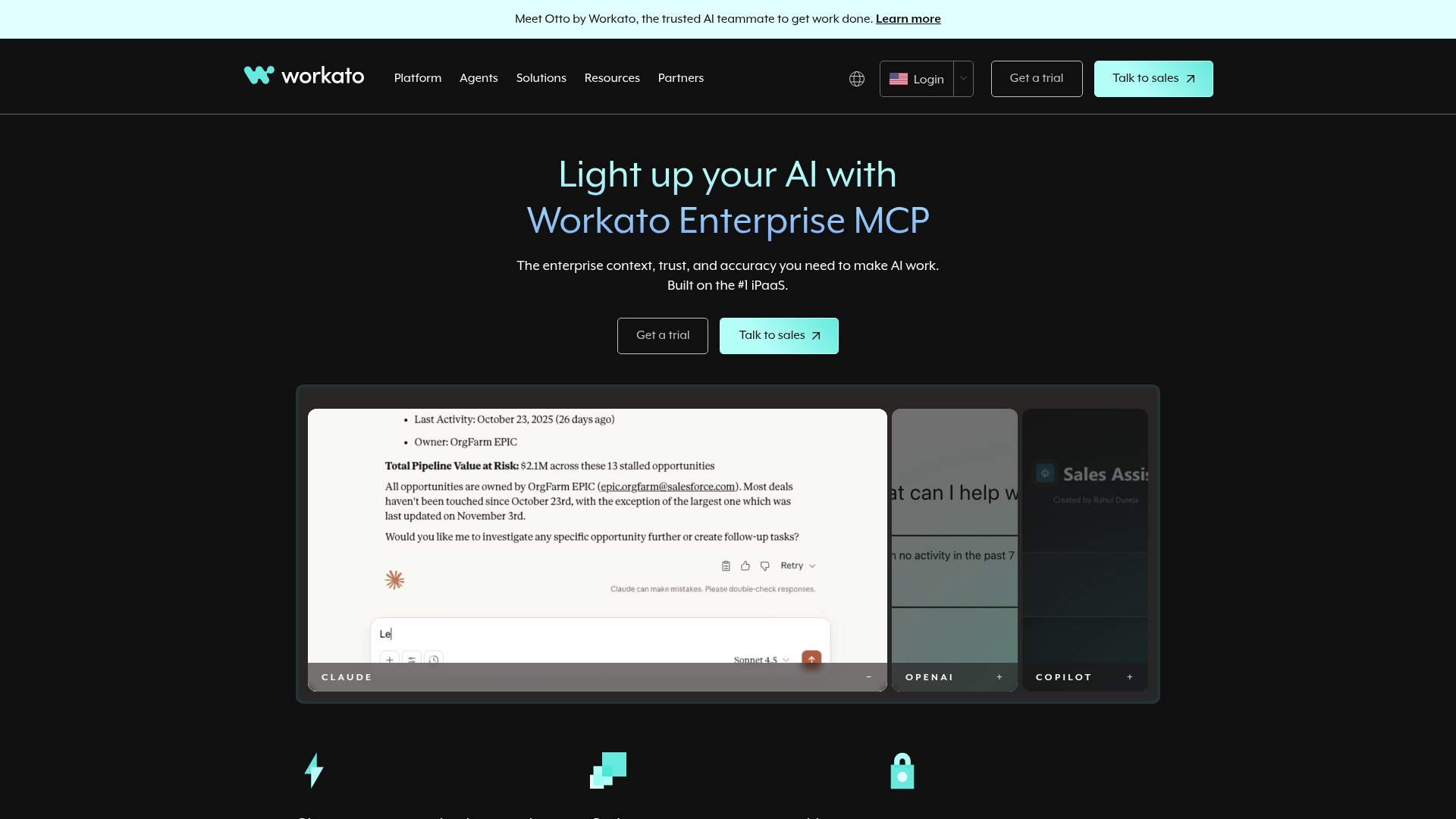
Workato is an enterprise-grade automation and integration platform with strong governance features.
Best for
-
larger organizations
-
enterprise process automation
-
teams needing advanced governance and IT controls
Strengths
-
enterprise administration
-
broad integration coverage
-
strong lifecycle and governance controls
-
solid for cross-department automation at scale
Limitations
For many growing ecommerce teams, Workato is more platform than they need. It can be heavier to implement, more expensive, and less purpose-built for Shopify merchant workflows than a specialized solution.
Quick comparison table
|
Tool |
Best For |
Ease of Use |
Workflow Depth |
Shopify/Ecommerce Fit |
Human Support |
Standout Advantage |
|---|---|---|---|---|---|---|
|
MESA |
Shopify merchants and ecommerce ops teams |
High |
High |
Excellent |
Excellent |
Shopify-first automation with plain-English workflow creation |
|
Zapier |
Beginners and general business workflows |
High |
Medium |
Medium |
Medium |
Massive app ecosystem |
|
Make |
Visual power users |
Medium |
High |
Medium |
Medium |
Strong visual branching and mapping |
|
n8n |
Technical teams |
Medium |
High |
Medium |
Low-Medium |
Flexibility and self-hosting |
|
Workato |
Enterprise IT and operations |
Medium |
High |
Medium |
High |
Enterprise governance and scale |
Why MESA is different from generic no code automation tools
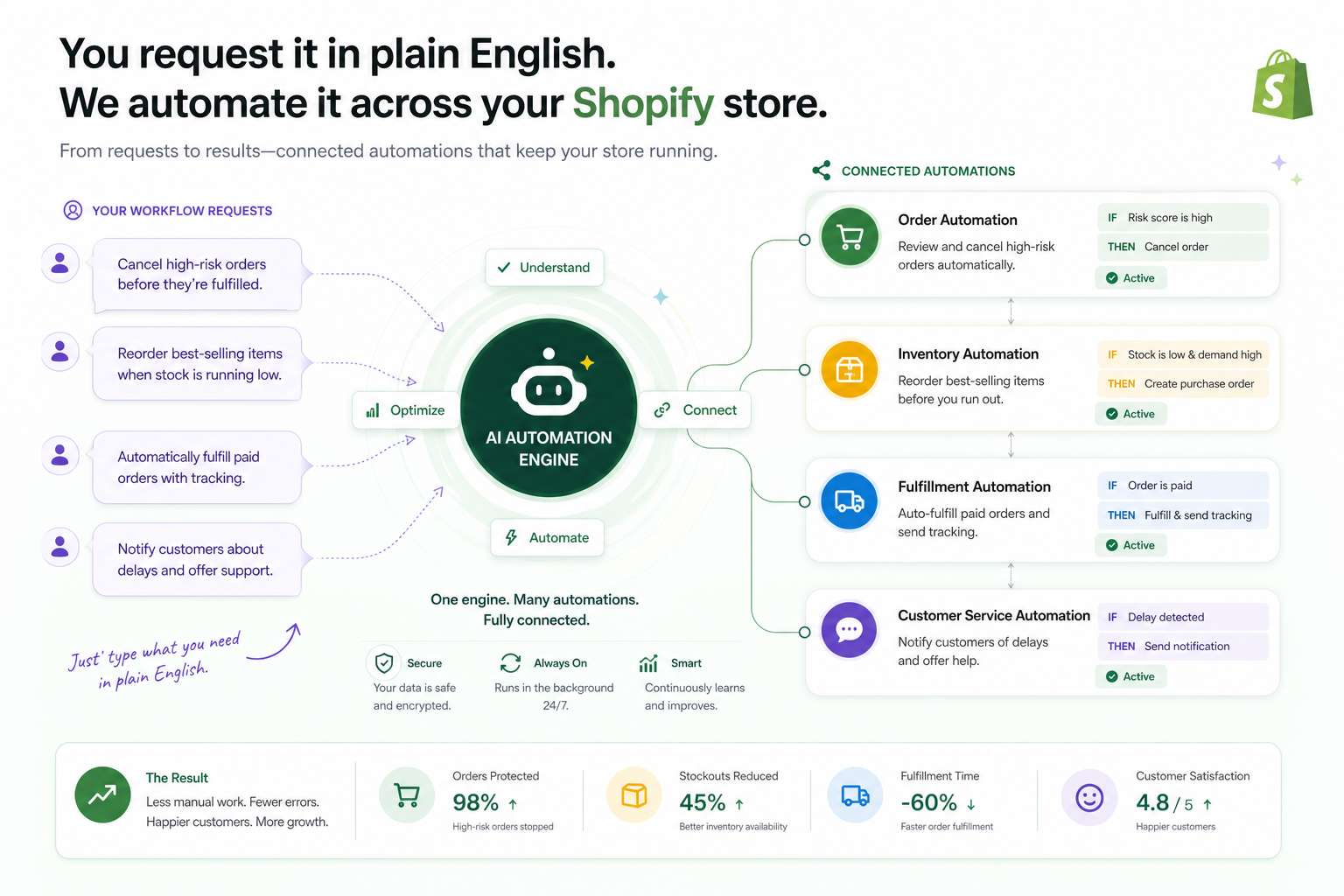
A lot of no code automation platforms are trying to serve every kind of business. That sounds appealing, but in practice it often means ecommerce merchants have to force their workflows into generic tooling.
MESA takes the opposite approach.
It is built around the reality of Shopify operations, where workflows involve:
-
orders
-
products
-
customers
-
inventory
-
fulfillment
-
shipping
-
marketing tools
-
support tools
-
internal notifications
-
back-office systems
That specialization creates a better fit for merchants who need automation that actually reflects how ecommerce work happens.
Plain-English workflow creation changes the speed of execution
One of MESA’s biggest advantages is how quickly teams can get from idea to live workflow.
Instead of building from scratch, teams can simply describe what they want:
-
“When a high-value order comes in, notify Slack, tag the order, and send the customer into a VIP flow.”
-
“If inventory drops below threshold, alert the team and update our sheet.”
-
“When an order ships, sync the data to our ERP and trigger follow-up messaging.”
That removes a huge amount of setup friction.
Templates accelerate adoption
MESA also offers 300+ ready-made templates, which matters for growing teams that want quick wins. Instead of reinventing common workflows, they can start from proven patterns and customize as needed.
Real support matters
One of the most overlooked parts of automation is what happens after launch. Teams need help troubleshooting, improving logic, and expanding workflows as the business grows.
MESA backs the product with real human support, which is a major advantage for merchants who do not want to manage automation alone.
The best use cases for no code automation in ecommerce
Even though this article is about growing teams broadly, ecommerce teams often get the most immediate value from no code automation because so much operational work is repetitive and cross-functional.
Order management
-
tag and route orders automatically
-
trigger internal alerts for specific order conditions
-
send order data to fulfillment or ERP systems
-
handle exception flows for high-risk or VIP orders
Inventory and product sync
-
sync stock levels between Shopify and connected systems
-
alert teams before inventory issues become oversells
-
update product data across apps automatically
Customer experience
-
trigger personalized post-purchase flows
-
notify customer service teams of order exceptions
-
create better follow-up based on order or customer behavior
Reporting and operations visibility
-
push operational data to Google Sheets or Airtable
-
automate recurring summaries and alerts
-
keep teams informed without manual exports
Fulfillment coordination
-
notify warehouses or 3PL partners
-
trigger shipping-related steps automatically
-
reduce manual handoffs between systems
How to choose the right no code automation platform
If you are choosing between tools, start with the workflows you need to automate most often.
Choose based on your operational reality
Ask:
-
Do we need general business automation or ecommerce-specific automation?
-
How much Shopify logic is involved?
-
Do we need simple workflows or complex multi-step processes?
-
Who will build and maintain the workflows?
-
How important is hands-on support?
-
How quickly do we need value?
A practical framework
|
If your team needs… |
Best fit |
|---|---|
|
Simple, general app automations |
Zapier |
|
Detailed visual branching across apps |
Make |
|
Flexible, technical control |
n8n |
|
Enterprise-grade governance |
Workato |
|
Shopify-first operational automation without developers |
MESA |
Final verdict
The best no code automation tools help growing teams do more than save time. They reduce operational drag, prevent avoidable mistakes, connect your systems, and help you scale without piling more work onto your team.
For broad business use cases, tools like Zapier, Make, n8n, and Workato each have a place.
But for Shopify merchants and ecommerce teams, MESA is the standout choice because it is built around the workflows that matter most to store operations. It helps teams automate repetitive Shopify tasks without requiring a developer, supports complex multi-step automations, connects with 100+ ecommerce tools and apps, includes 300+ templates for faster setup, and gives merchants both AI-powered workflow creation and real human support.
If your team wants to reduce manual work, avoid operational errors, and turn plain-English requests into working automations quickly, MESA is the platform to start with.
Try MESA to turn repetitive Shopify work into scalable automation – and give your team more time to focus on growth, not busywork.