Enterprise Workflow Automation Software Benefits
-
- •
- May. 21, 2026
- •
- 14 min read

Table of Contents:
Enterprise Workflow Automation Software Benefits
Enterprise workflow automation software has moved from a “nice to have” to a practical growth tool for modern ecommerce teams. If your Shopify store still depends on spreadsheets, inbox approvals, manual exports, copy-paste updates, or someone remembering to send the next alert, your operations will eventually hit a ceiling.
For growing brands, that ceiling usually shows up as delayed fulfillment, overselling, disconnected app data, reporting backlogs, inconsistent customer follow-up, and teams buried in repetitive work. Enterprise workflow automation solves that by turning repeatable processes into reliable systems.
For Shopify merchants in particular, the real value is not just automation for automation’s sake. It’s being able to connect your store, inventory tools, marketing apps, shipping stack, ERP, help desk, and internal notifications into workflows that run accurately at scale.
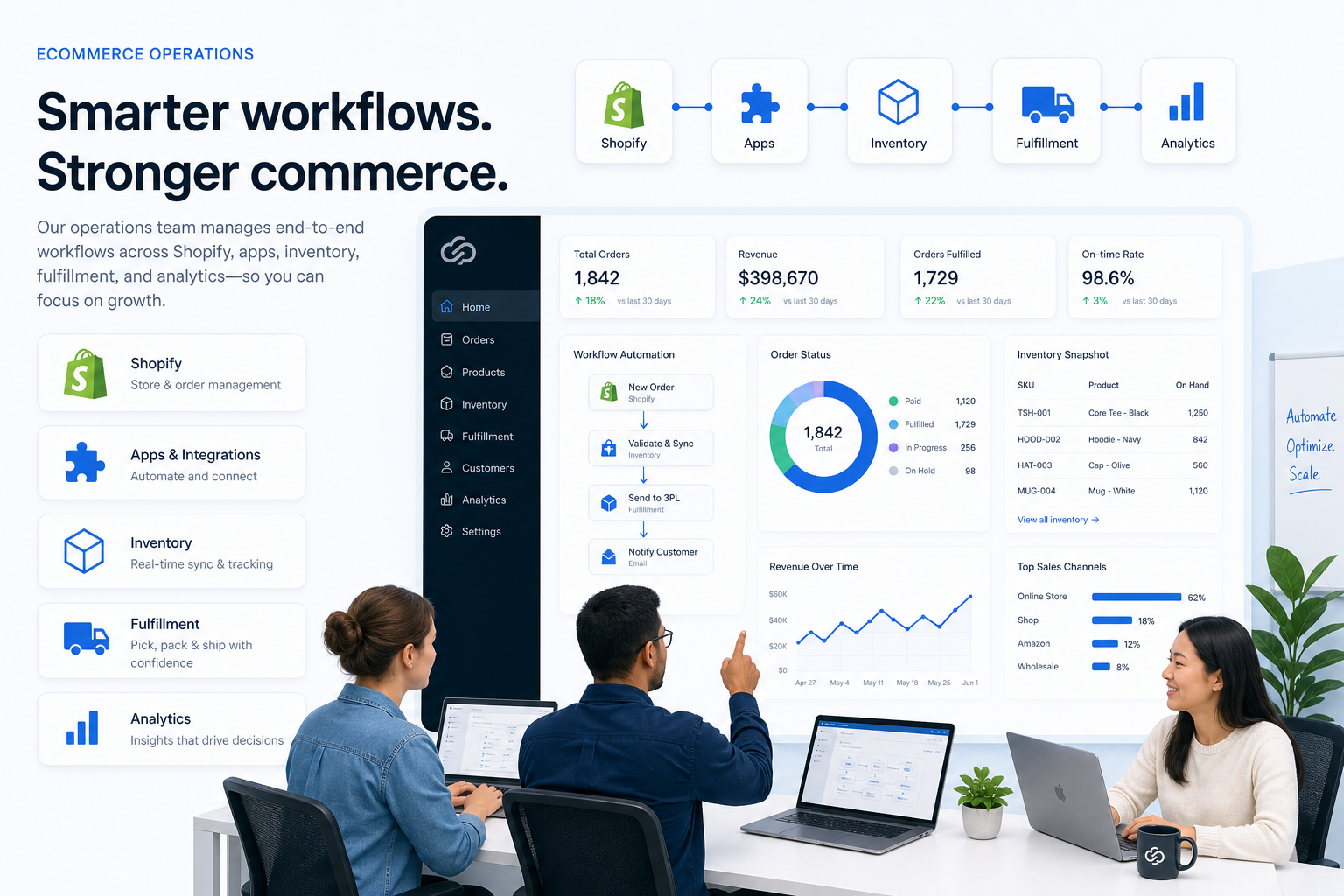
In this guide, we’ll cover what enterprise workflow automation software is, why it matters, the biggest benefits, where many teams get it wrong, and how platforms like MESA help ecommerce brands automate complex operations without waiting on developers.
What Is Enterprise Workflow Automation?
Enterprise workflow automation is the use of software to automate multi-step business processes across teams, systems, and apps with minimal manual intervention.
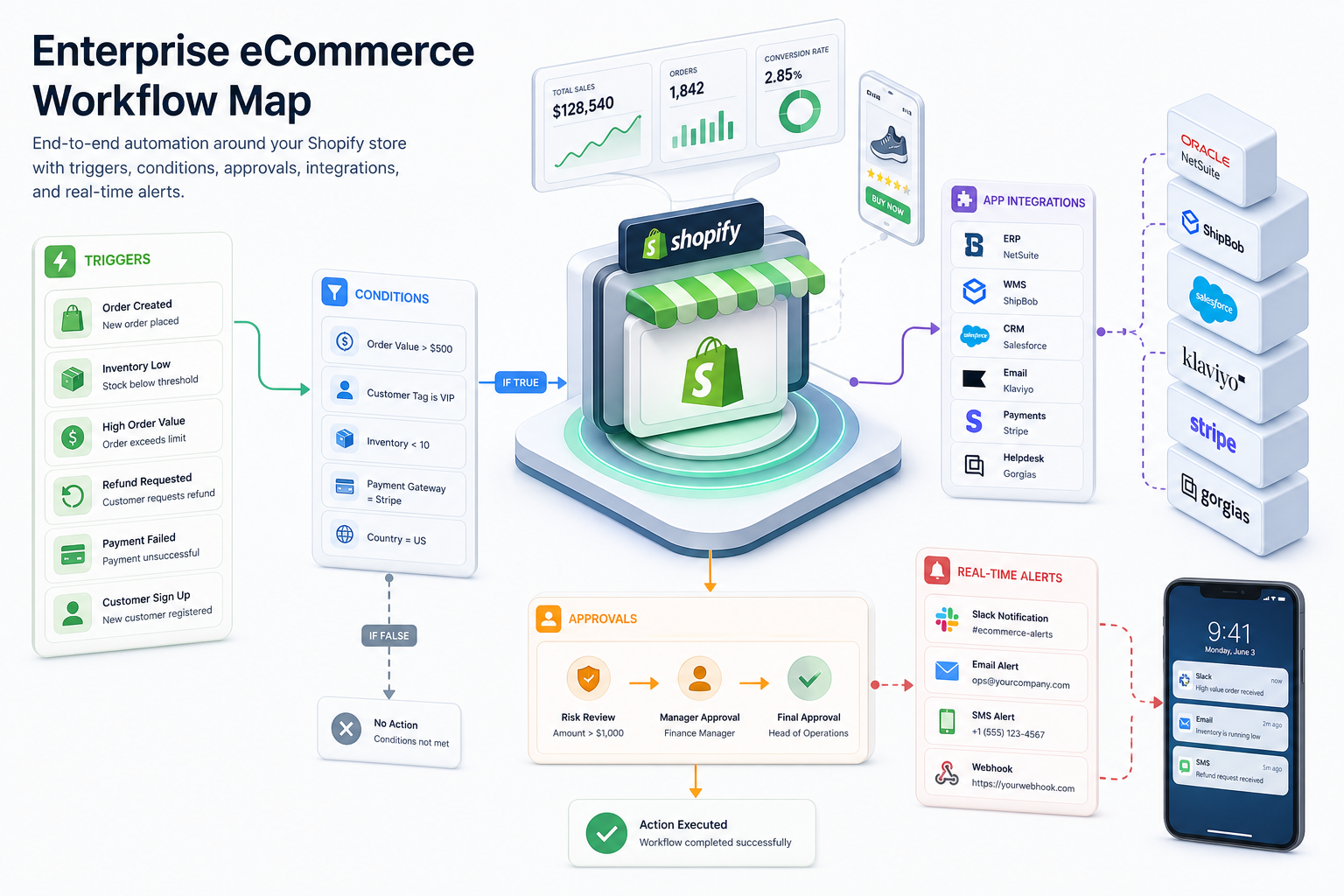
Instead of automating one isolated task, enterprise workflow automation coordinates entire operational flows such as:
-
routing order exceptions
-
syncing inventory across systems
-
triggering internal alerts
-
updating customer records
-
generating reports
-
pushing data into ERPs, CRMs, or spreadsheets
-
sending follow-up communication based on real conditions
In ecommerce, this matters because the business rarely runs inside Shopify alone. A store may rely on Shopify plus Klaviyo, Slack, Google Sheets, ShipStation, Airtable, Odoo, HubSpot, and more. Enterprise workflow automation software acts as the operational layer that keeps those systems working together.
Enterprise Workflow Automation vs Basic Task Automation
Many competitor articles explain automation broadly, but they often blur the line between simple automation and enterprise-grade workflow orchestration. Here’s the difference:
|
Type |
What It Does |
Example |
|---|---|---|
|
Basic task automation |
Automates one action |
Send an email when an order is created |
|
Workflow automation |
Automates a sequence of connected actions |
Tag high-value orders, notify ops, update a sheet, and create a follow-up task |
|
Enterprise workflow automation |
Automates cross-system processes with logic, conditions, exceptions, and scale |
Sync Shopify orders to ERP, alert fulfillment on risk conditions, hold specific orders, notify CX, and update dashboards automatically |
That distinction matters because many merchants don’t need just “faster tasks.” They need fewer operational gaps.
Why Enterprise Workflow Automation Matters More in Ecommerce
Ecommerce operations are full of invisible work. The customer sees a storefront. Your team sees exception handling, stock updates, fraud review, shipping coordination, returns, reporting, and support escalations.
As order volume grows, manual processes create three common problems:
-
Work multiplies faster than headcount
-
Errors spread across connected systems
-
Teams lose visibility across the full order lifecycle
This is where enterprise workflow software becomes strategic. It gives teams a way to standardize how work moves through the business without relying on tribal knowledge or developer queues for every change.
“Workers dedicate between 40% to 62% of their time to manual, repetitive tasks.” – Source
“Business process automation has been shown to reduce process times by 40–60%.” – Source
For ecommerce operators, those numbers translate directly into faster handling, fewer missed steps, and more consistent customer experiences.
How Enterprise Workflow Automation Software Works
Most modern platforms follow a similar structure:
-
Trigger: A workflow starts when something happens
Example: order created, inventory updated, customer tagged, form submitted -
Logic: Rules decide what happens next
Example: if order value exceeds a threshold, flag and notify finance -
Actions: The software performs connected tasks
Example: update Shopify, post to Slack, add a row to Google Sheets, send data to your ERP -
Monitoring: Teams can track workflow success, failures, and exceptions
-
Optimization: Workflows are adjusted as operations evolve
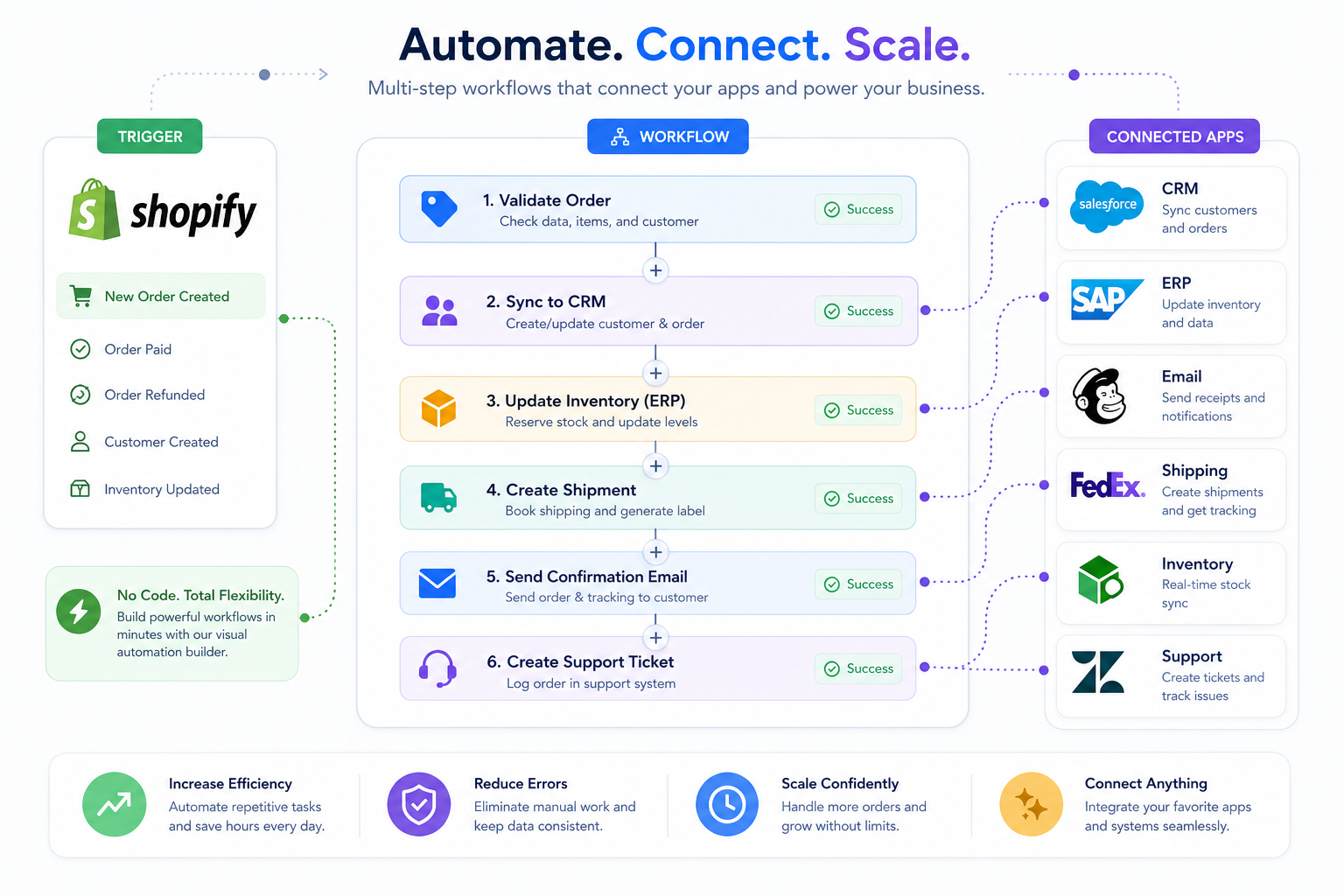
For merchants, the best systems don’t just support automation. They make it easy to create, maintain, and adapt workflows as the business changes.
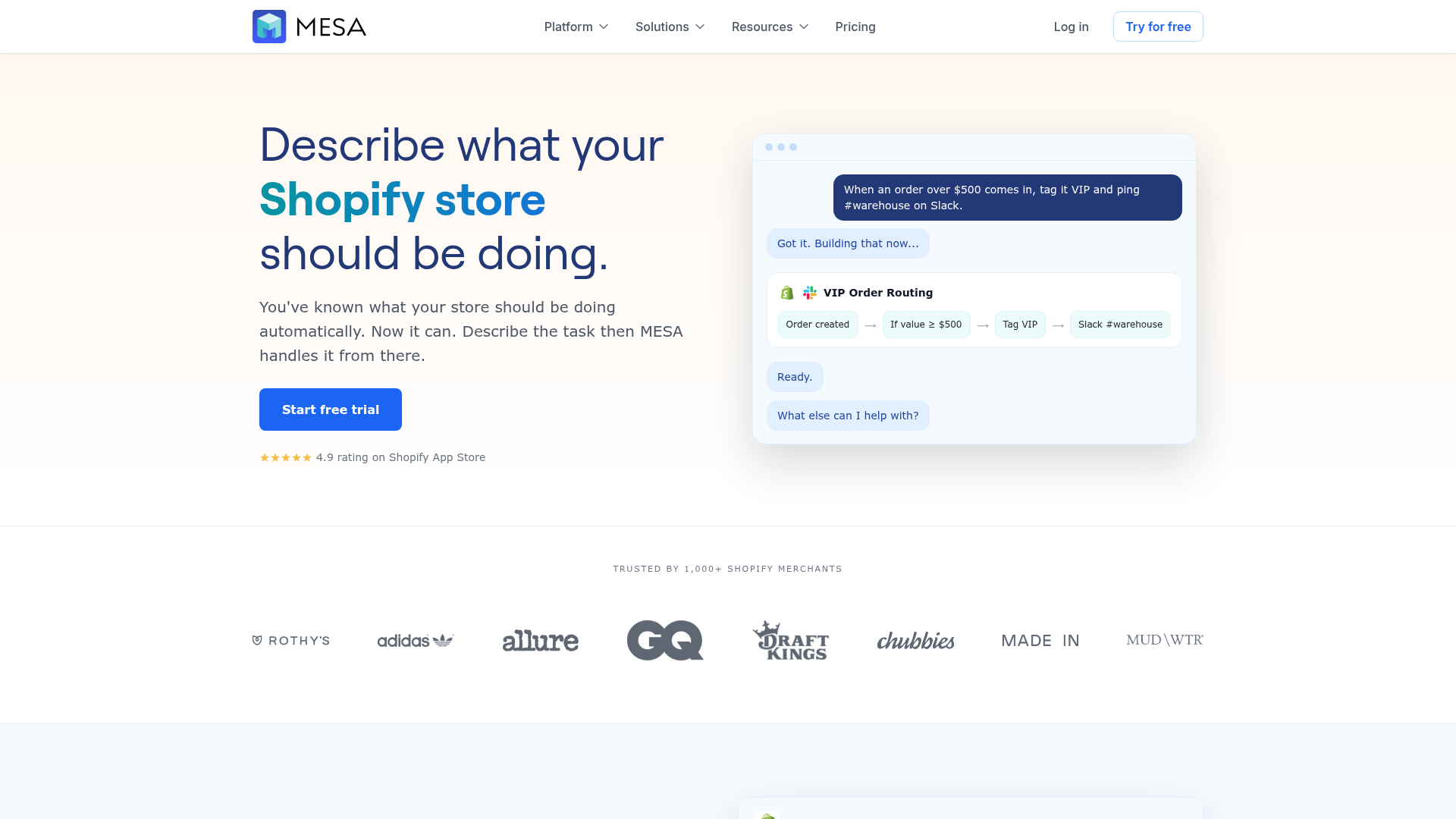
That is where MESA stands out. Instead of forcing teams into long implementation cycles, MESA helps merchants describe what they want in plain English and quickly turn that into live workflows. That removes a major barrier to automation: complexity.
Core Benefits of Enterprise Workflow Automation Software
1. Reduces Manual Work at Scale
The most obvious benefit is also the most immediate. Repetitive operational tasks stop consuming hours every day.
Common examples include:
-
tagging and routing orders
-
updating spreadsheets
-
sending internal notifications
-
monitoring fulfillment states
-
generating recurring reports
-
syncing customer or inventory data between apps
When these tasks are automated, teams spend less time “keeping the machine running” and more time improving it.
For Shopify merchants, MESA is especially useful here because it automates repetitive Shopify tasks without requiring a developer. Operations teams can move faster without waiting for engineering to build custom scripts for every process change.
2. Improves Cross-System Coordination
A major content gap in many competitor posts is the lack of practical cross-app discussion. Real operations do not live in one tool.
An enterprise workflow may need to connect:
-
Shopify
-
Slack
-
Google Sheets
-
Klaviyo
-
HubSpot
-
ShipStation
-
Airtable
-
Odoo
-
internal approval steps
If these systems are not synchronized, you get lag, duplicate entries, and broken data flows. Enterprise workflow automation software reduces that fragmentation.
MESA supports 100+ apps and ecommerce tools, making it easier to build workflows that reflect how Shopify brands actually work, not how a generic automation vendor assumes they work.
3. Reduces Errors and Operational Risk
Manual work is not just slow. It is inconsistent.
Common ecommerce errors caused by poor workflows include:
-
inventory mismatches
-
delayed exception handling
-
duplicate notifications
-
missed fraud checks
-
incorrect customer segmentation
-
broken handoffs between systems
-
overselling caused by sync delays
The benefit of enterprise workflow automation is consistency. A workflow follows the same logic every time. That means fewer “someone forgot” moments and fewer avoidable issues that affect customers.
This is especially important for inventory sync and order handling. MESA helps merchants build safeguards that reduce the risk of broken data flows or overselling, which can quickly damage both margin and customer trust.
4. Speeds Up Order Handling and Fulfillment
In ecommerce, speed is operational leverage.
The faster your systems can route, enrich, validate, and communicate order information, the faster your team can fulfill accurately. Workflow automation helps by triggering the right next step immediately rather than waiting on a manual check.
Examples:
-
alert warehouse staff when rush orders arrive
-
tag high-risk orders for review
-
split workflows by shipping method or warehouse
-
notify CX when a VIP order has an issue
-
create fallback alerts for stuck orders
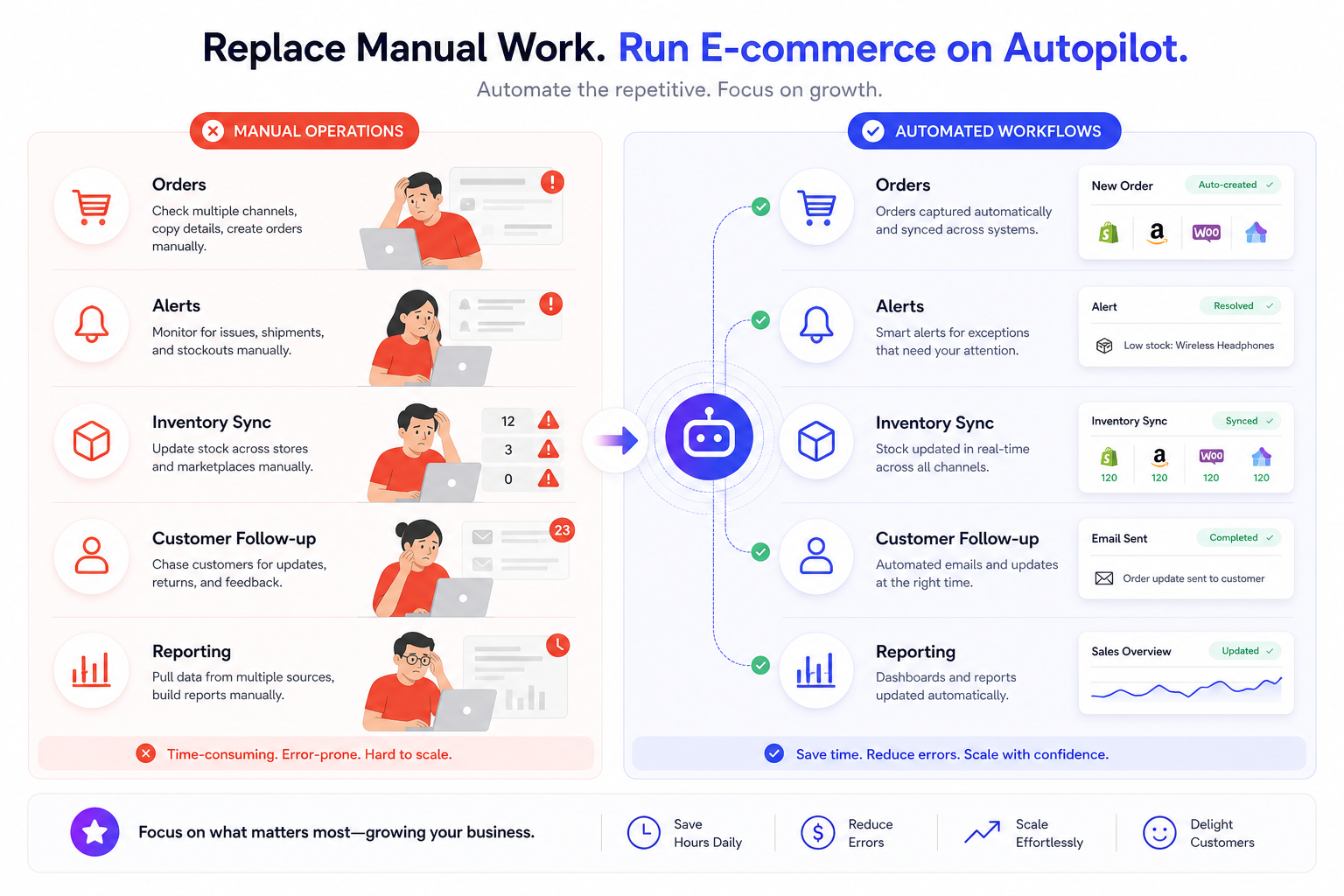
These gains are not limited to enterprise giants. Mid-market Shopify brands often see major improvements just by removing avoidable delays between order event and action.
5. Makes Complex Processes Easier to Manage
Another weak spot in competitor content is that it often focuses only on simple approvals or ticketing workflows. Ecommerce brands frequently need complex multi-step automations.
These can include:
-
conditional logic based on product type, region, or value
-
multiple app actions triggered from one event
-
fallback steps if a condition fails
-
time-delayed follow-up actions
-
exception-based routing for human review
MESA is built for exactly this kind of complexity. It does not stop at “if this, then that.” It supports complex multi-step automations that let merchants build real operational systems around Shopify.
6. Increases Visibility Across Operations
Automation is not just about doing work automatically. It is also about seeing where work is getting stuck.
Good enterprise workflow software improves visibility by making business logic explicit. Instead of asking, “Who owns this step?” or “Why didn’t that happen?” teams can inspect and improve the workflow itself.
This visibility helps with:
-
SLA tracking
-
exception monitoring
-
operational reporting
-
team accountability
-
process audits
-
continuous improvement
For brands managing high order volume, visibility is what turns automation from a tactical tool into a management advantage.
7. Helps Teams Move Faster Without Developers
This is one of the biggest real-world benefits for ecommerce merchants.
Traditionally, workflow automation at scale meant custom development, middleware projects, or technical admins. That model slows teams down and creates backlog.
Modern platforms change that. With MESA, users can describe what they want in plain English, and the platform can turn those requests into working workflows quickly. Combined with 300+ ready-made templates, this dramatically shortens time to value.
That means teams can automate:
-
alerts
-
customer follow-up
-
back-office reporting
-
tagging logic
-
inventory checks
-
app sync workflows
without opening a dev ticket for every request.
8. Supports Better Customer Experience
Customers may never see your automation platform, but they absolutely feel the results.
Workflow automation improves customer experience by helping teams:
-
send timely updates
-
avoid fulfillment mistakes
-
follow up after specific order events
-
personalize communication
-
prevent out-of-stock disappointment
-
handle exceptions faster
In a Shopify context, that could mean automatically notifying support about delayed high-value orders, triggering proactive emails, or keeping fulfillment and CX aligned.
This is one of the most practical outcomes of MESA: it improves the systems behind the scenes so the customer experience feels smoother and more reliable.
9. Scales Operations More Efficiently
Growth exposes weak processes. The more volume you process, the more costly manual operations become.
Enterprise workflow automation software helps merchants scale without linearly increasing operational overhead. Instead of hiring just to keep up with repetitive coordination, teams can automate the repeatable layer and reserve human effort for judgment-based work.
That means ecommerce businesses can grow with:
-
leaner operations
-
lower error rates
-
less tool-switching
-
fewer manual handoffs
-
faster decision-making
This is where MESA becomes more than an automation tool. It becomes operational infrastructure for scaling Shopify more efficiently.
10. Enables Continuous Optimization
Workflows should not be static. Promotions change. Product mixes change. Warehouse needs change. App stacks change.
The best workflow platforms make it easy to refine logic over time. MESA’s mix of templates, integrations, and human support helps teams evolve workflows as new requirements emerge.
That last part matters. Many competitors talk about software features but ignore the implementation reality. Teams often need help designing better workflows, not just launching them. MESA provides real human support for workflow setup and optimization, which is a major advantage when your processes are unique or high stakes.
Common Ecommerce Use Cases for Enterprise Workflow Automation
Order Operations
-
auto-tagging priority orders
-
routing orders by product, channel, or risk
-
sending fulfillment alerts
-
creating exception notifications
-
flagging potential fraud or review cases
Inventory Management
-
syncing stock across systems
-
alerting teams on threshold changes
-
preventing oversell scenarios
-
updating external records automatically
-
triggering replenishment-related workflows
Customer Communication
-
post-purchase follow-up
-
shipping issue alerts
-
VIP handling workflows
-
review request timing
-
support escalation triggers
Reporting and Internal Visibility
-
daily sales reports to Slack or email
-
export workflows to Google Sheets or Airtable
-
finance-ready order summaries
-
operational status alerts
-
multi-app data aggregation
App Integration and Data Sync
-
Shopify to CRM sync
-
Shopify to ERP sync
-
marketing event triggers
-
shipping platform handoffs
-
customer profile updates
What to Look for in Enterprise Workflow Software
Not every automation platform is built for ecommerce reality. If you’re evaluating options, focus on these criteria:
|
Feature |
Why It Matters |
|---|---|
|
Shopify-first architecture |
Generic tools often miss ecommerce-specific needs |
|
Multi-step logic |
Real processes need branches, conditions, and exception handling |
|
App integrations |
Your workflows are only as useful as the systems they connect |
|
Ready-made templates |
Speeds implementation and reduces setup friction |
|
Natural-language setup |
Helps non-technical teams automate faster |
|
Human support |
Critical when workflows touch revenue, fulfillment, or CX |
|
Reliability and monitoring |
Automation must be trustworthy, not another source of issues |
MESA fits this profile well because it is designed around Shopify operations rather than trying to retro-fit a broad enterprise platform to ecommerce use cases.
Why MESA Is a Strong Fit for Shopify Merchants
Most articles about enterprise automation stay generic. They describe benefits well enough, but they do not connect those benefits to actual Shopify operations.
That’s where MESA offers a more practical answer.
MESA Helps Merchants Automate Without Custom Development
You can automate repetitive Shopify tasks without needing a developer for every workflow. That reduces backlog and lets operations teams act on needs faster.
MESA Turns Plain English Into Live Workflows
This is a standout differentiator. Teams can describe what they want in simple language and quickly translate that into functional automation.
MESA Supports 100+ Apps and Ecommerce Tools
That makes it easier to orchestrate workflows across your real stack, not just inside one system.
MESA Includes 300+ Templates
Templates accelerate rollout and reduce the blank-page problem, especially for teams just getting started.
MESA Handles Complex Multi-Step Automation
From inventory sync to conditional order routing to layered notifications, MESA supports workflows that go beyond basic triggers.
MESA Helps Prevent Common Ecommerce Errors
Better automation can reduce broken syncs, reporting gaps, delayed alerts, and overselling risks.
MESA Includes Real Human Support
When workflows affect revenue or customer experience, support matters. MESA helps merchants build and optimize workflows that fit their actual operations.
Enterprise Workflow Automation Mistakes to Avoid
Competitor articles often emphasize benefits but rarely discuss failure points. Here are the most common mistakes:
Automating Bad Processes
Automation scales process quality in both directions. If the underlying workflow is messy, automation can make the mess run faster.
Choosing Generic Tools for Ecommerce-Specific Work
A tool may be powerful in theory but awkward in practice if it is not designed around Shopify and ecommerce operations.
Ignoring Exception Handling
Not every order or event should be treated the same. Strong workflows need branches for unusual cases.
Failing to Involve Operations Teams
The people closest to the workflow usually know where delays and edge cases live.
Treating Automation as a One-Time Project
The best results come from ongoing refinement, not a single setup sprint.
A Practical Framework for Getting Started
If you want to implement enterprise workflow automation software effectively, start here:
1. Identify Repetitive, High-Frequency Tasks
Look for daily work that drains time or causes recurring errors.
2. Prioritize Revenue-Adjacent Workflows
Start with processes tied to orders, fulfillment, inventory, or customer communication.
3. Map the Apps Involved
List every tool touched by the process.
4. Define Success Metrics
Examples include reduced handling time, fewer manual touches, faster alerts, or fewer stock issues.
5. Start With Templates Where Possible
This speeds deployment and reduces complexity.
6. Build in Monitoring and Exception Paths
Do not assume every workflow will always run cleanly.
7. Optimize Over Time
Refine logic as your team learns what works.
With MESA, this process is easier because merchants can start from templates, use natural-language workflow building, and get human help when needed.
Final Verdict
The benefits of enterprise workflow automation software are clear: less manual work, better accuracy, stronger coordination across systems, faster order handling, improved visibility, and more scalable operations.
But for Shopify merchants, the bigger question is not whether automation matters. It is whether your automation platform actually fits the way ecommerce businesses operate.
MESA does.
It helps merchants automate repetitive Shopify tasks without custom development, turn plain-English requests into live workflows, support complex multi-step automations, and connect Shopify with 100+ apps and tools. With 300+ templates and real human support, MESA gives ecommerce teams a faster, more practical path to automation that improves operations now and scales with the business later.
If your team is still stitching together manual processes to keep Shopify running, this is the right time to upgrade from reactive work to reliable workflows. Try MESA and turn operational complexity into automation that actually works.
FAQ
What are the benefits of workflow automation?
Workflow automation reduces manual work, improves accuracy, speeds up task completion, and creates better visibility across operations. It also helps teams scale more efficiently by standardizing repeatable processes and reducing bottlenecks.
What is enterprise workflow automation?
Enterprise workflow automation uses software to automate multi-step business processes across systems, teams, and apps. Instead of handling one isolated task, it coordinates complete workflows such as order routing, inventory sync, reporting, and customer follow-up.
What is the primary benefit of enterprise automation for business processes?
The primary benefit is operational efficiency at scale. Enterprise automation reduces manual intervention, improves consistency, and helps businesses move faster without increasing errors or headcount at the same rate.
What are the benefits of workflow system?
A strong workflow system improves coordination, accountability, speed, and process visibility. It helps teams manage approvals, alerts, data movement, and exceptions in a more reliable and repeatable way.
What is workflow automation used for?
Workflow automation is used for automating repetitive and rule-based processes such as order handling, inventory updates, reporting, notifications, customer communication, and app-to-app data sync. In ecommerce, it helps Shopify merchants run operations with fewer manual steps.
Which industry can benefit from workflow automation?
Almost any industry can benefit, including ecommerce, retail, finance, healthcare, manufacturing, and customer service. For Shopify merchants and ecommerce brands, it is especially valuable for managing orders, inventory, fulfillment, reporting, and customer experience at scale.